Uganda Gorilla Trekking and Luxury Wildlife Safaris
An Introduction to Uganda
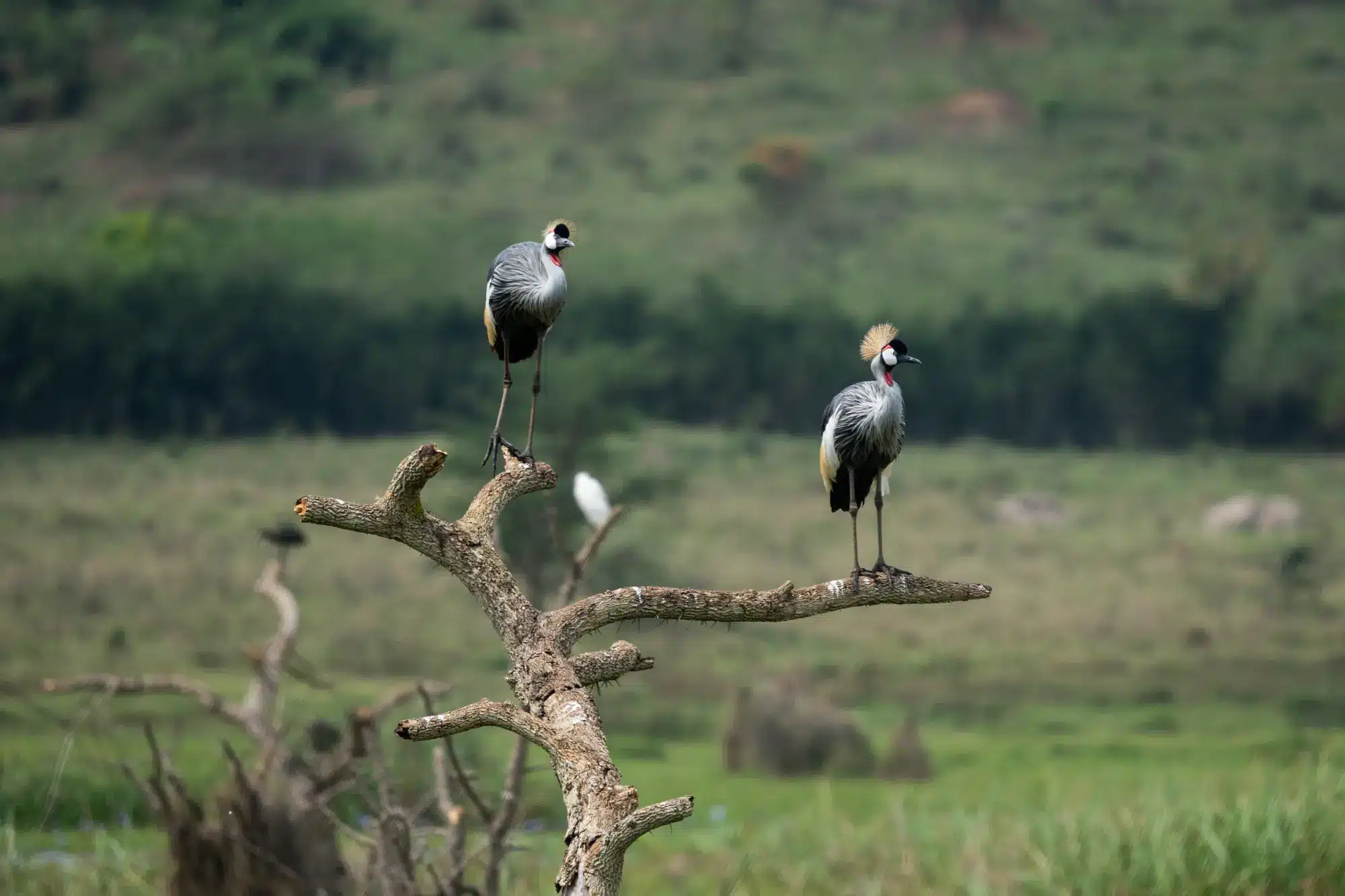
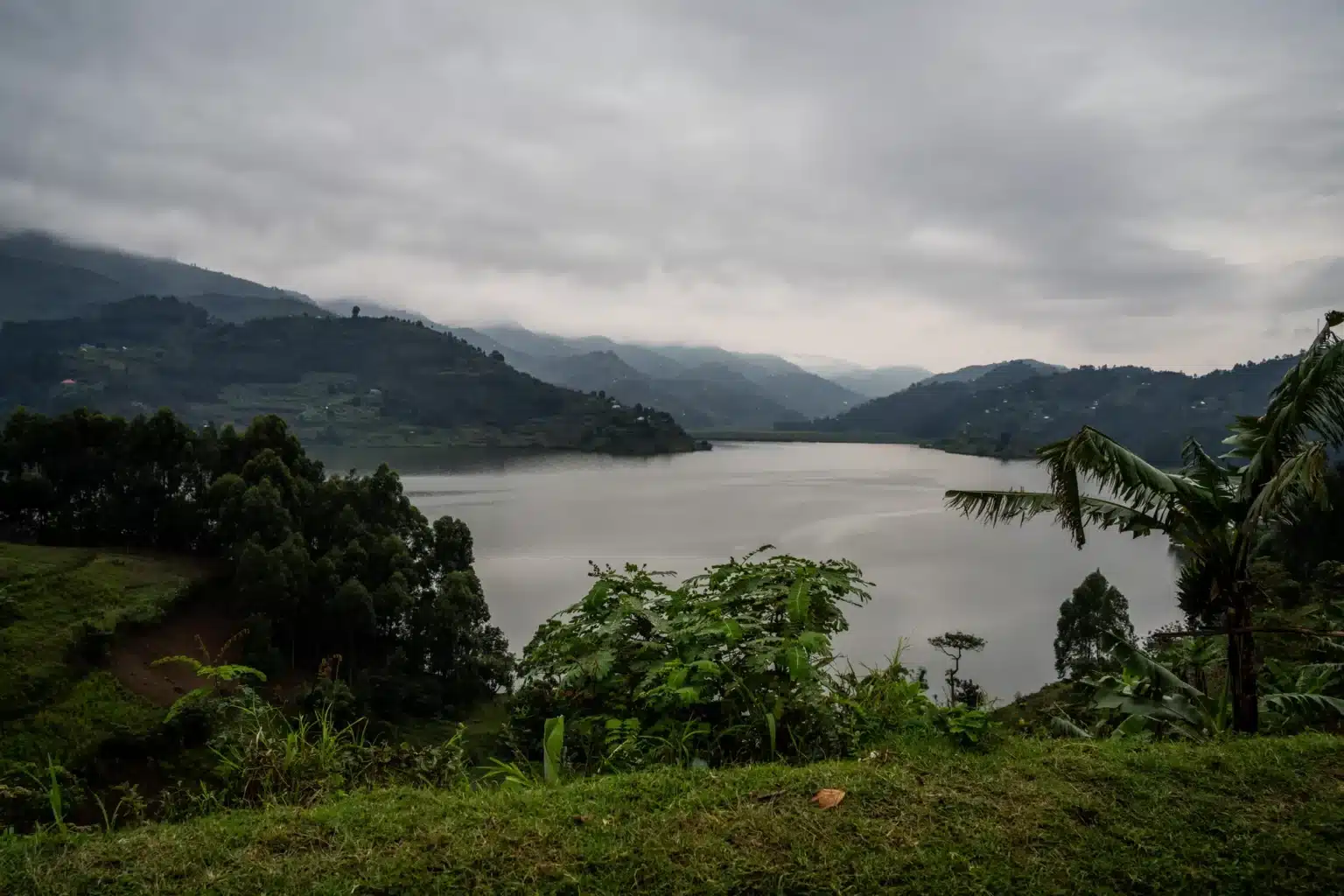
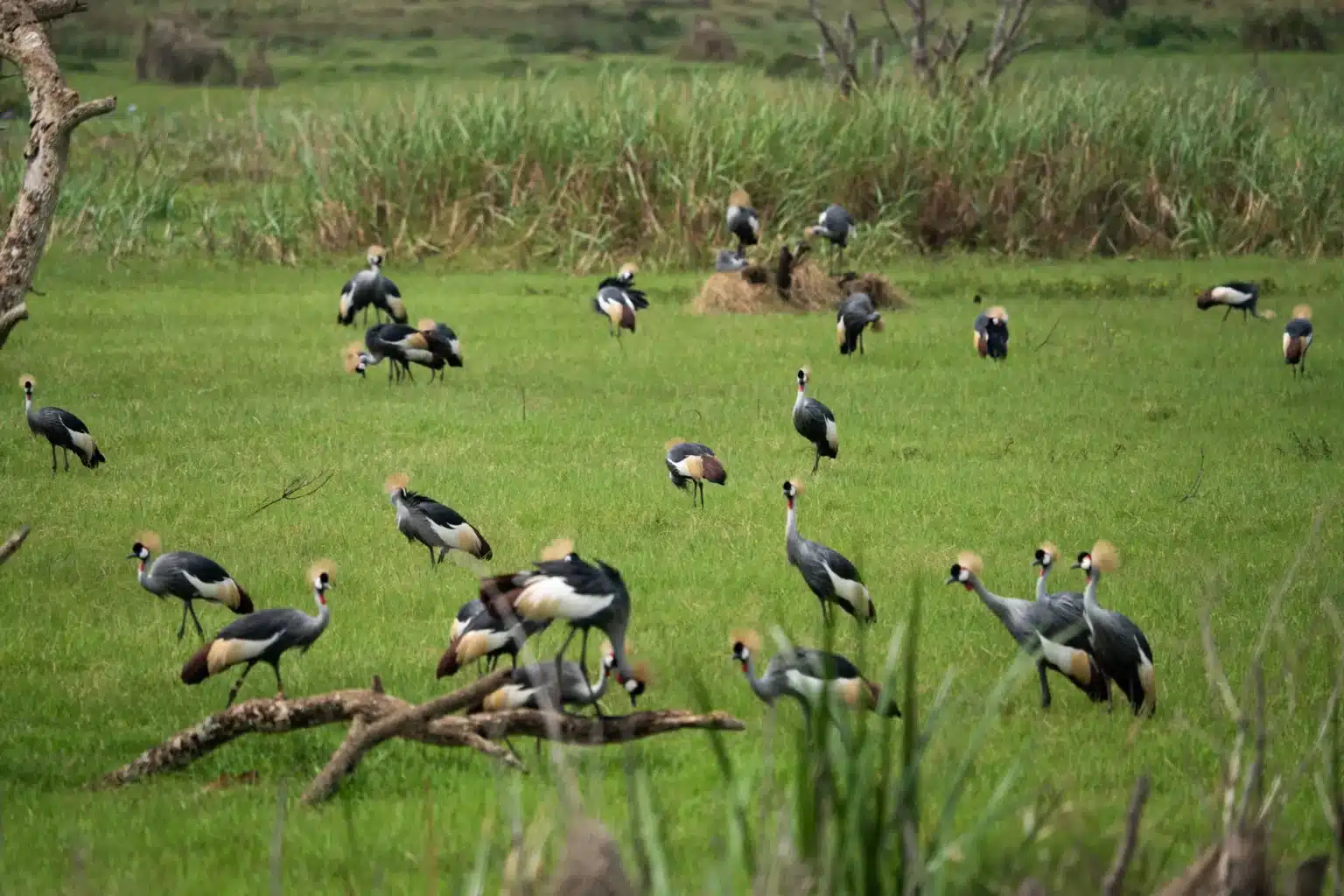
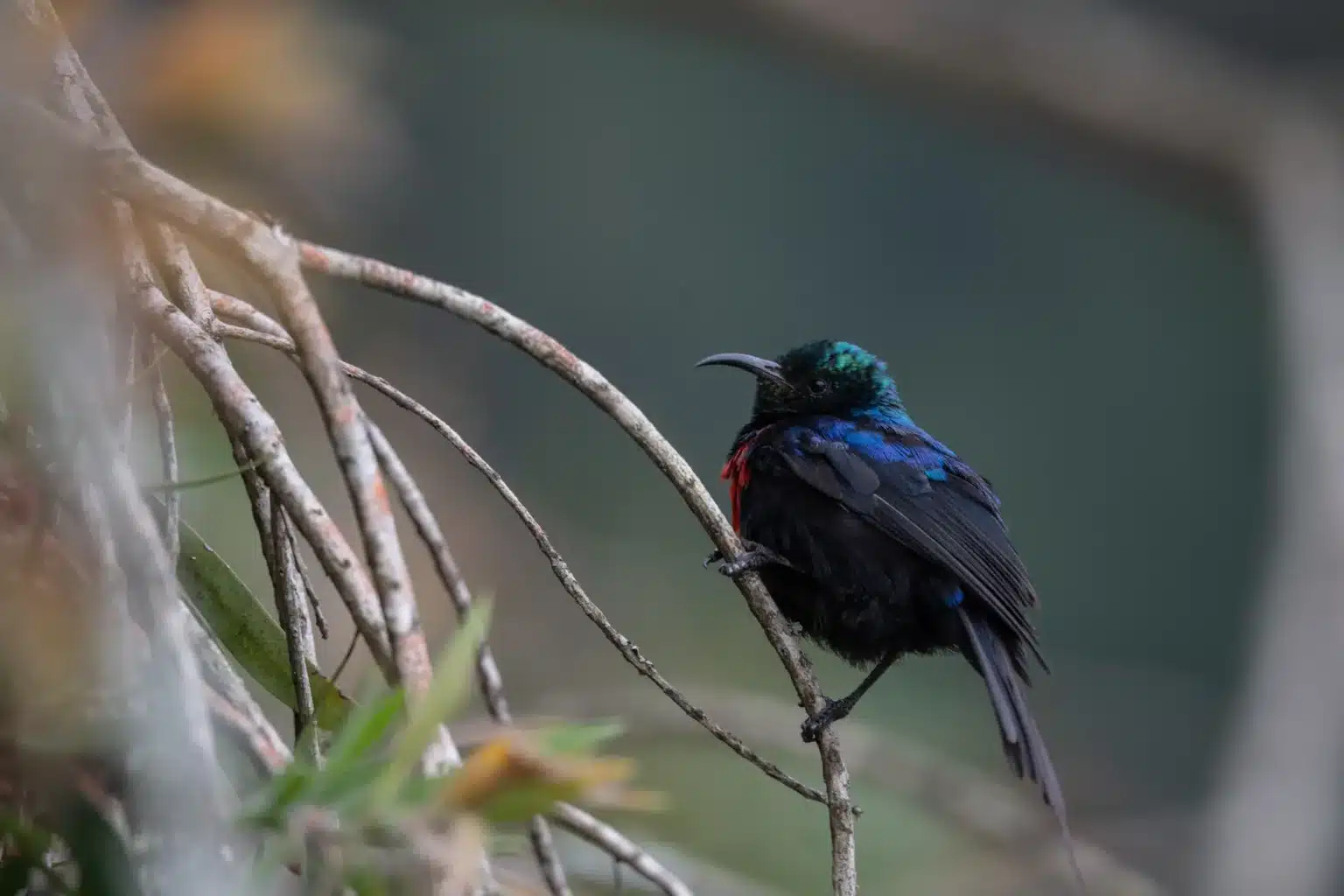
Imagine a country where you can trek to see Mountain gorillas, wander up green and misty mountains to find golden monkeys; where you can sight chimpanzees and sleep in a luxury lodge. A place where you can drive onto the savannah and observe lions, buffalo, elephants, giraffes and over 1,060 species of bird, including tiny glittering species of sunbird and kingfishers ior the rare Shoebill stork. A country where you can embark on a luxury safari alongside an adventurous, even arduous hike, or simply cruise along a lake looking for birds. This country, with eight major volcanoes, extensive wetlands and an inland sea, is the source of the River Nile. A land where you journey reveals ever-changing landscapes This is Uganda.
The Importance of Eco-Tourism in Uganda
Ecotourism is so important in any nation, but in Africa it takes on an importance of its own. Ecotourism supports local communities and creates employment while preserving wildlife sanctuaries and national parks. Bwindi Impenetrable National Park, Queen Elizabeth National Park, and Murchison Falls National Park generate revenue that helps to fund Uganda’s impressive wildlife conservation programs. The Uganda wildlife authority has strict policies in place that control how many people are allowed to visit the gorillas in order to ensure their safety and survival.
Uganda’s National Parks
Bwindi Impenetrable National Park
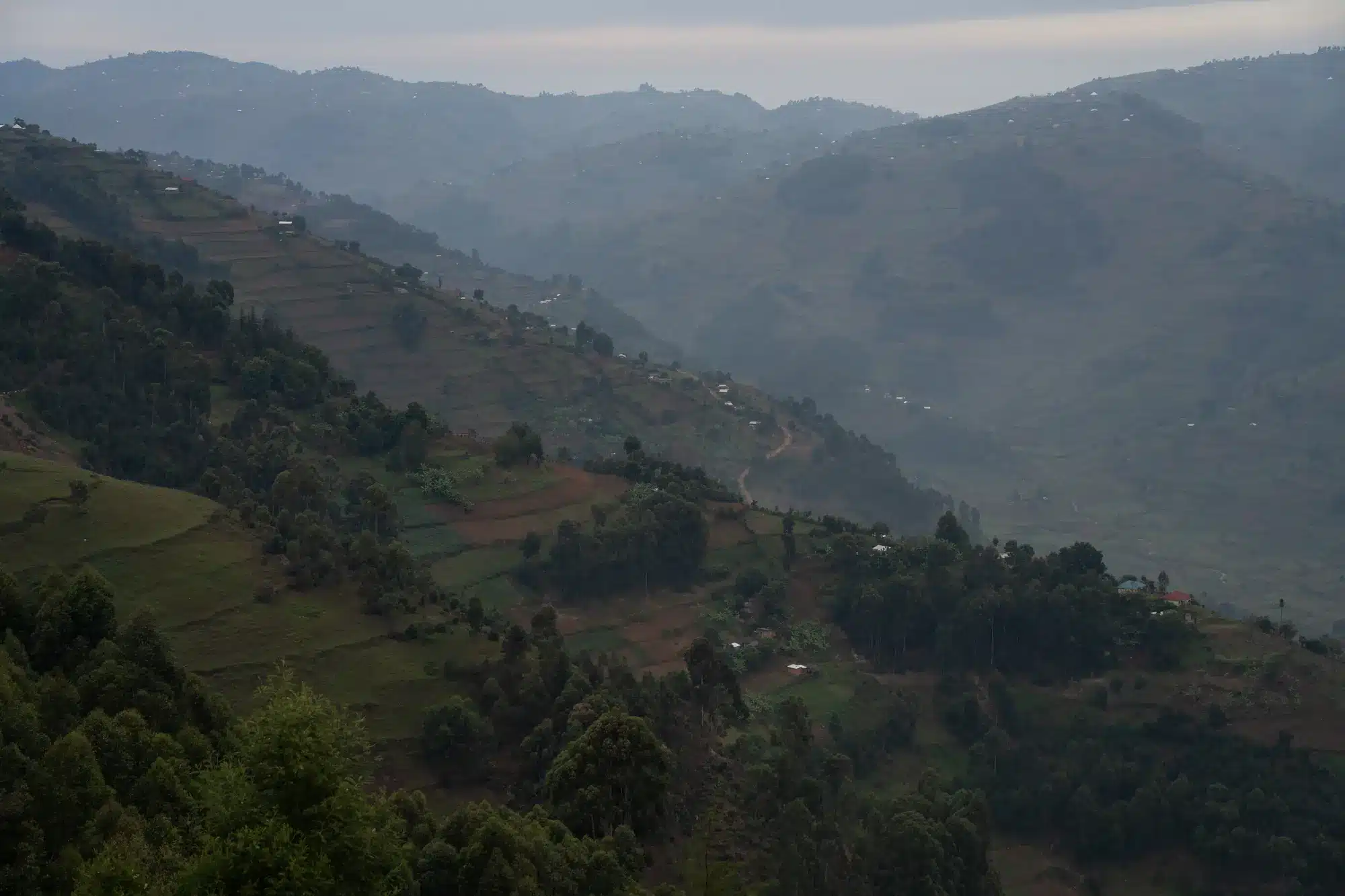
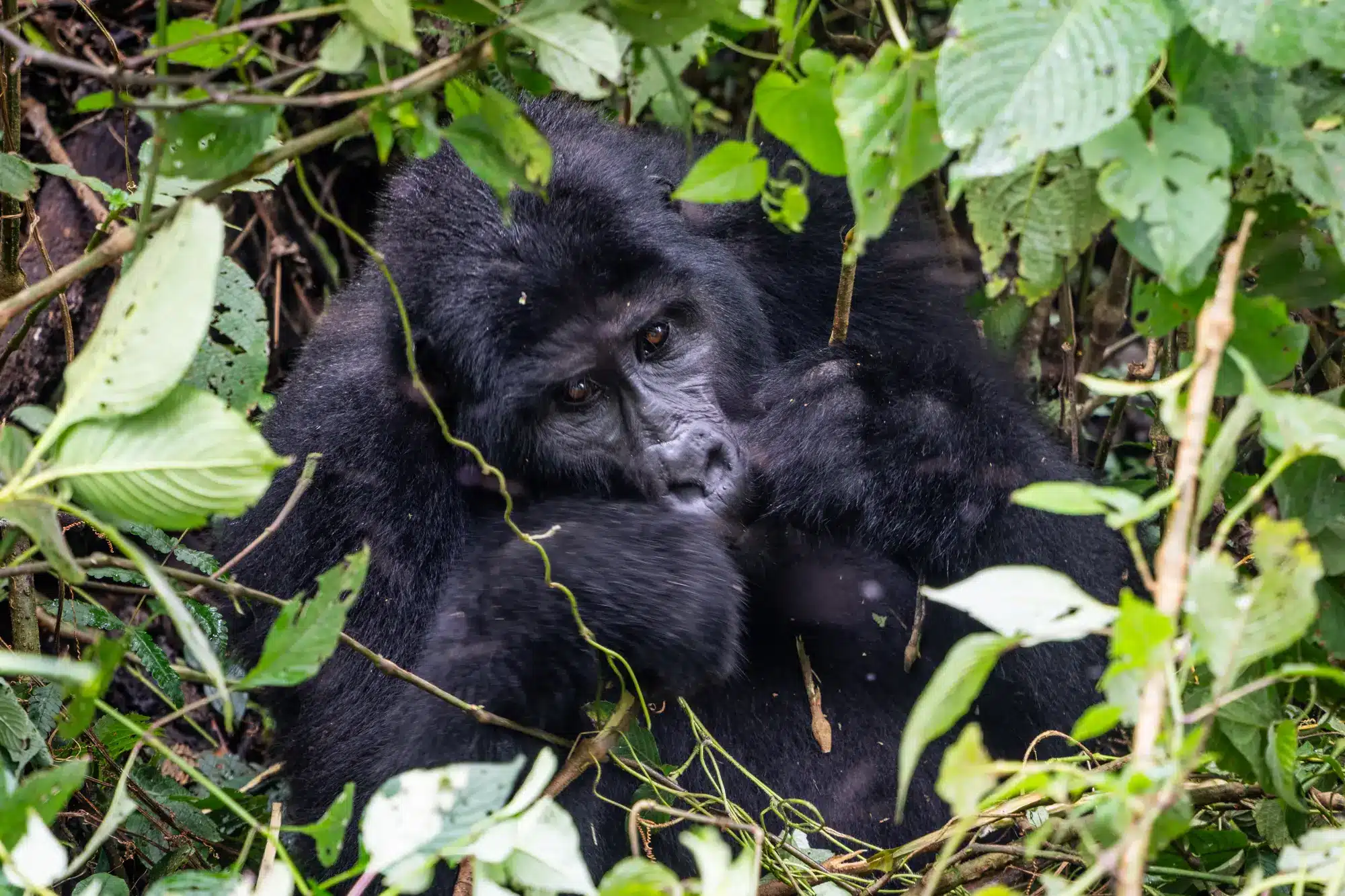
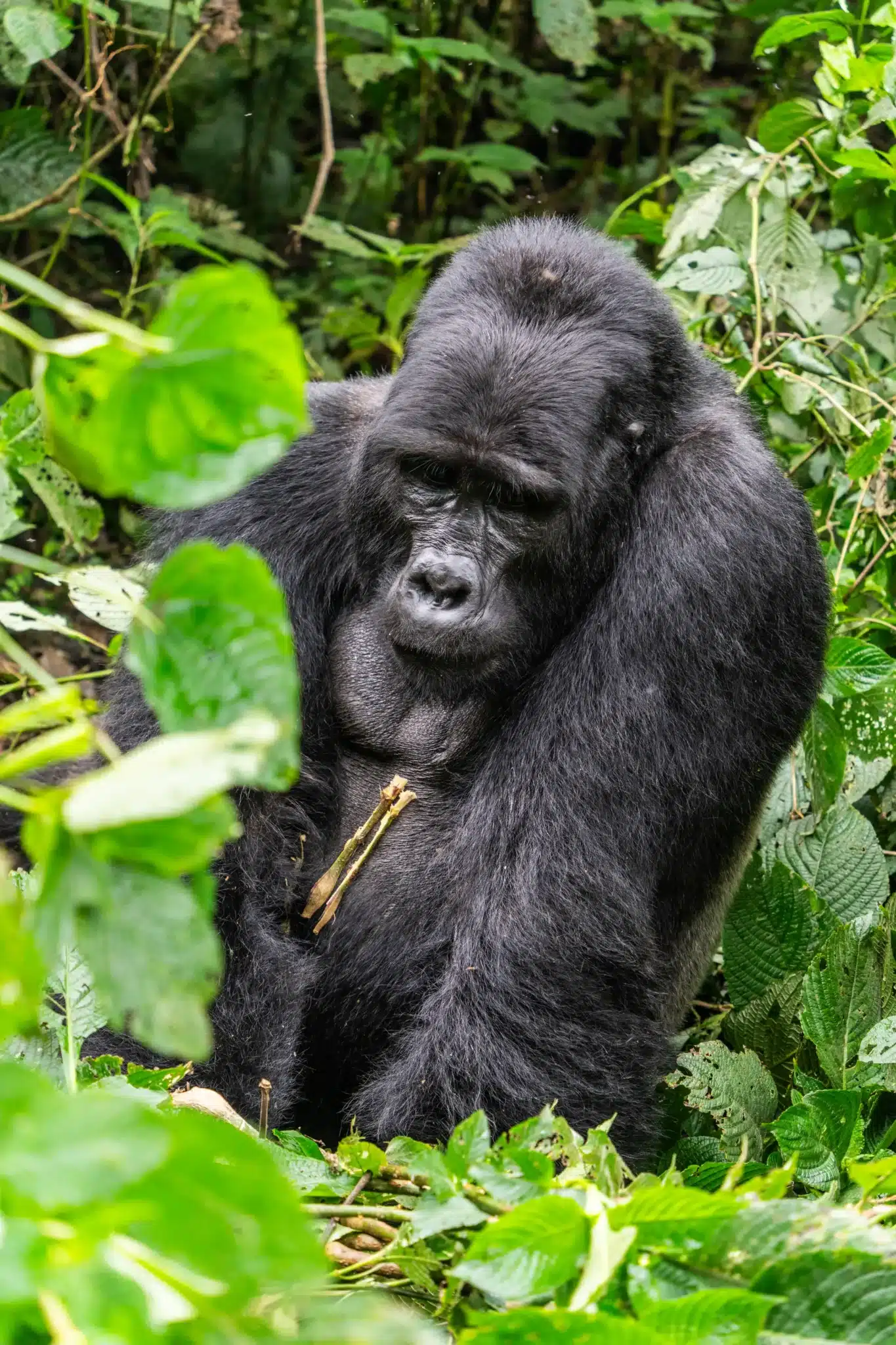
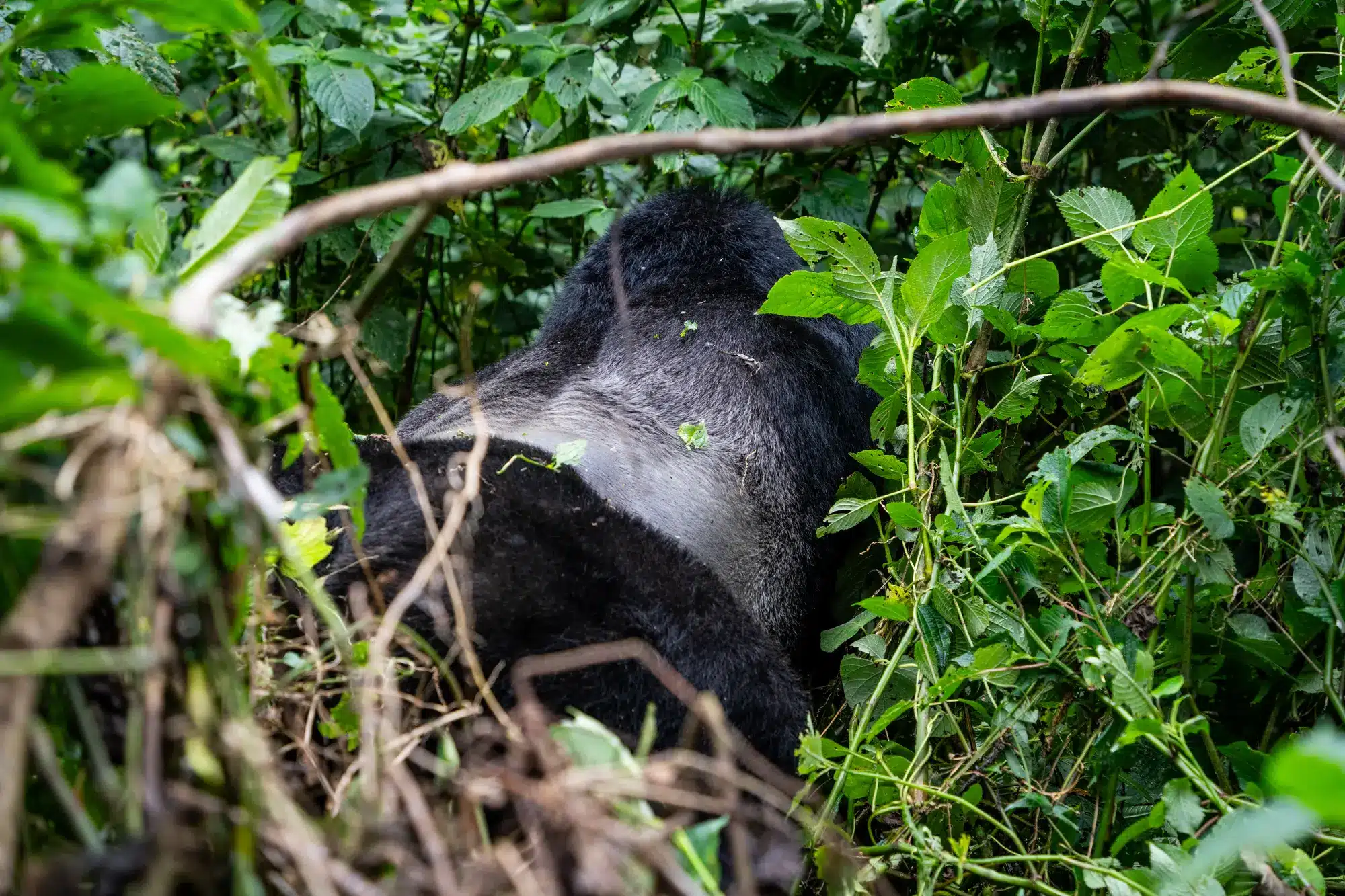
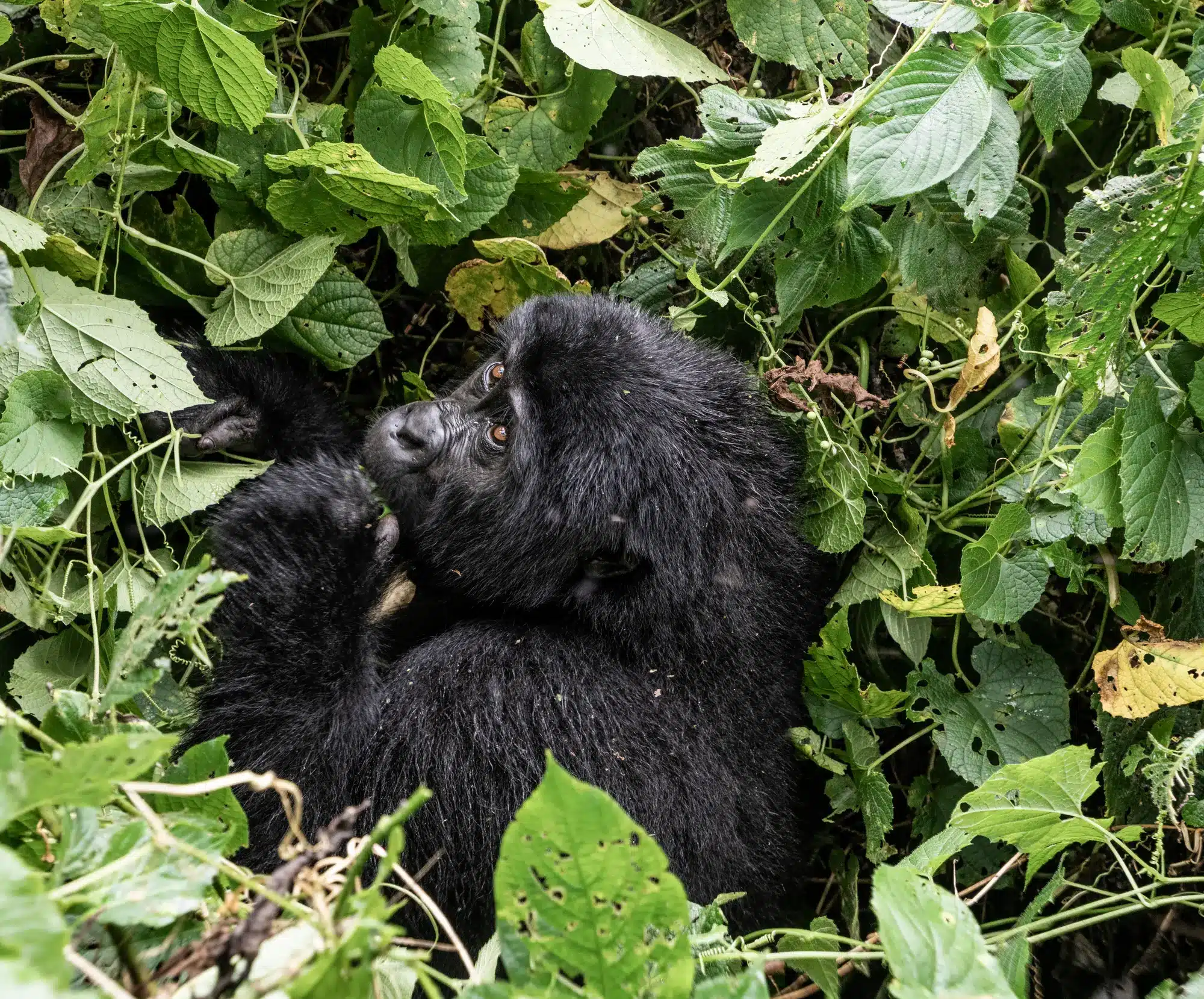
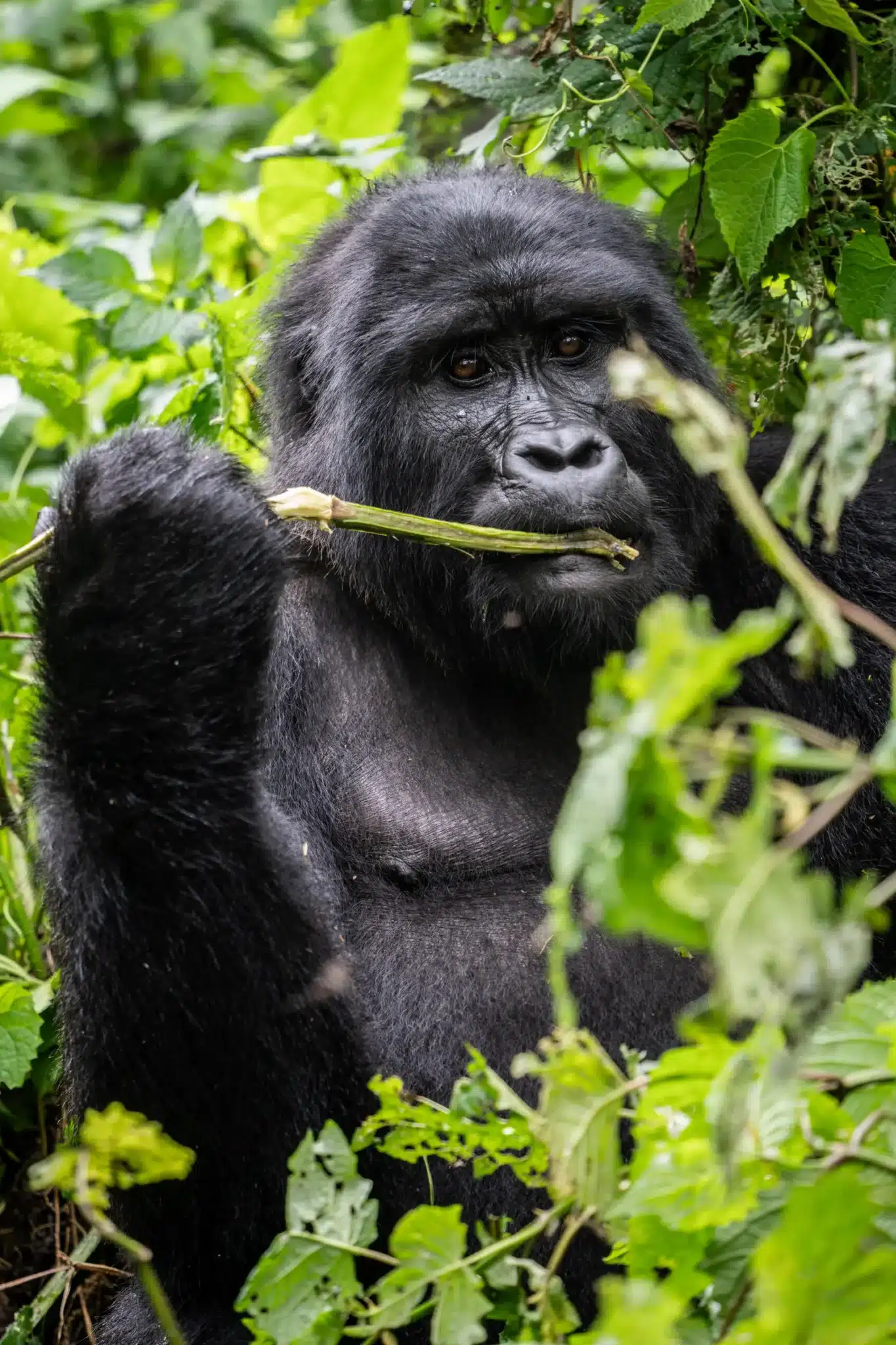
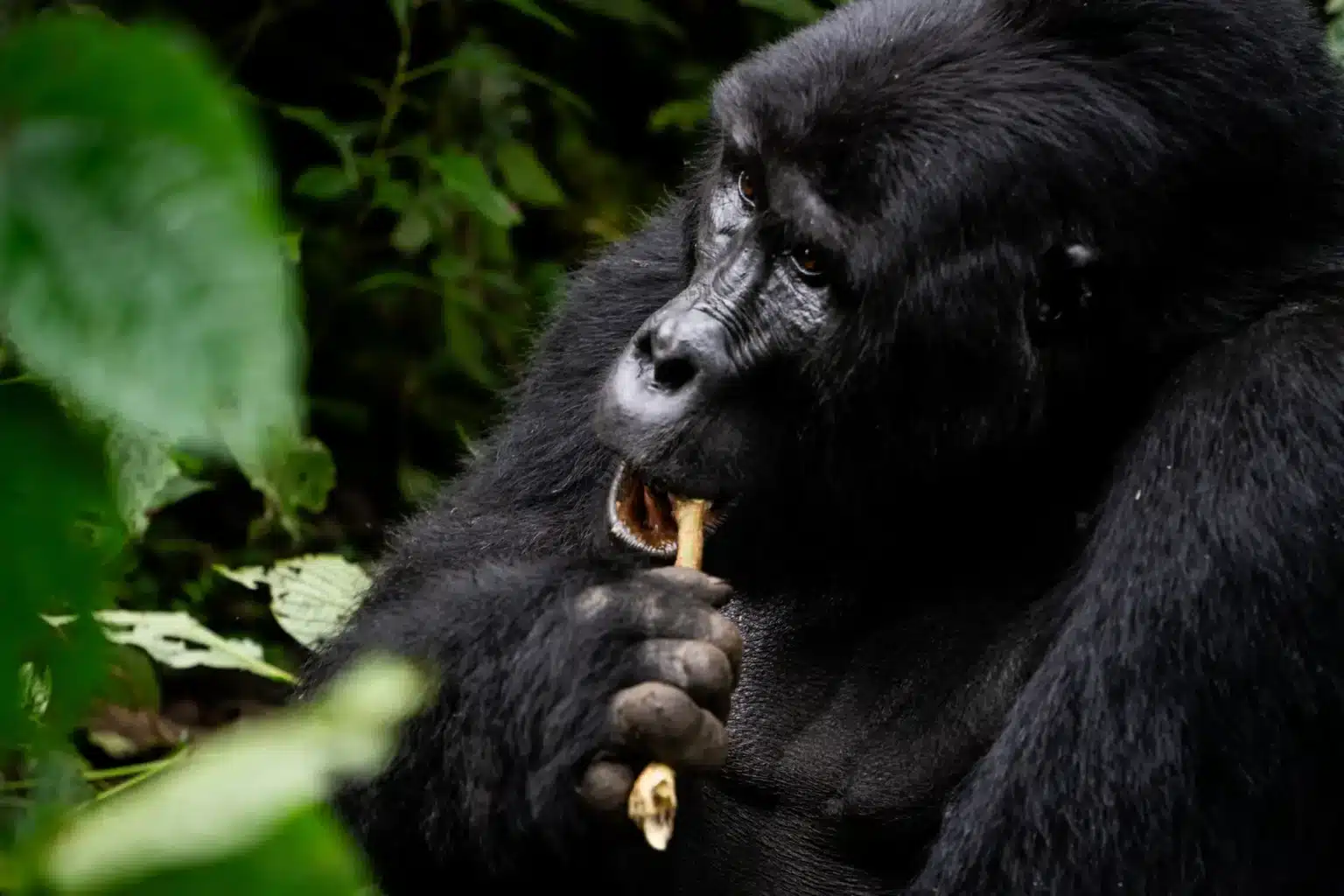
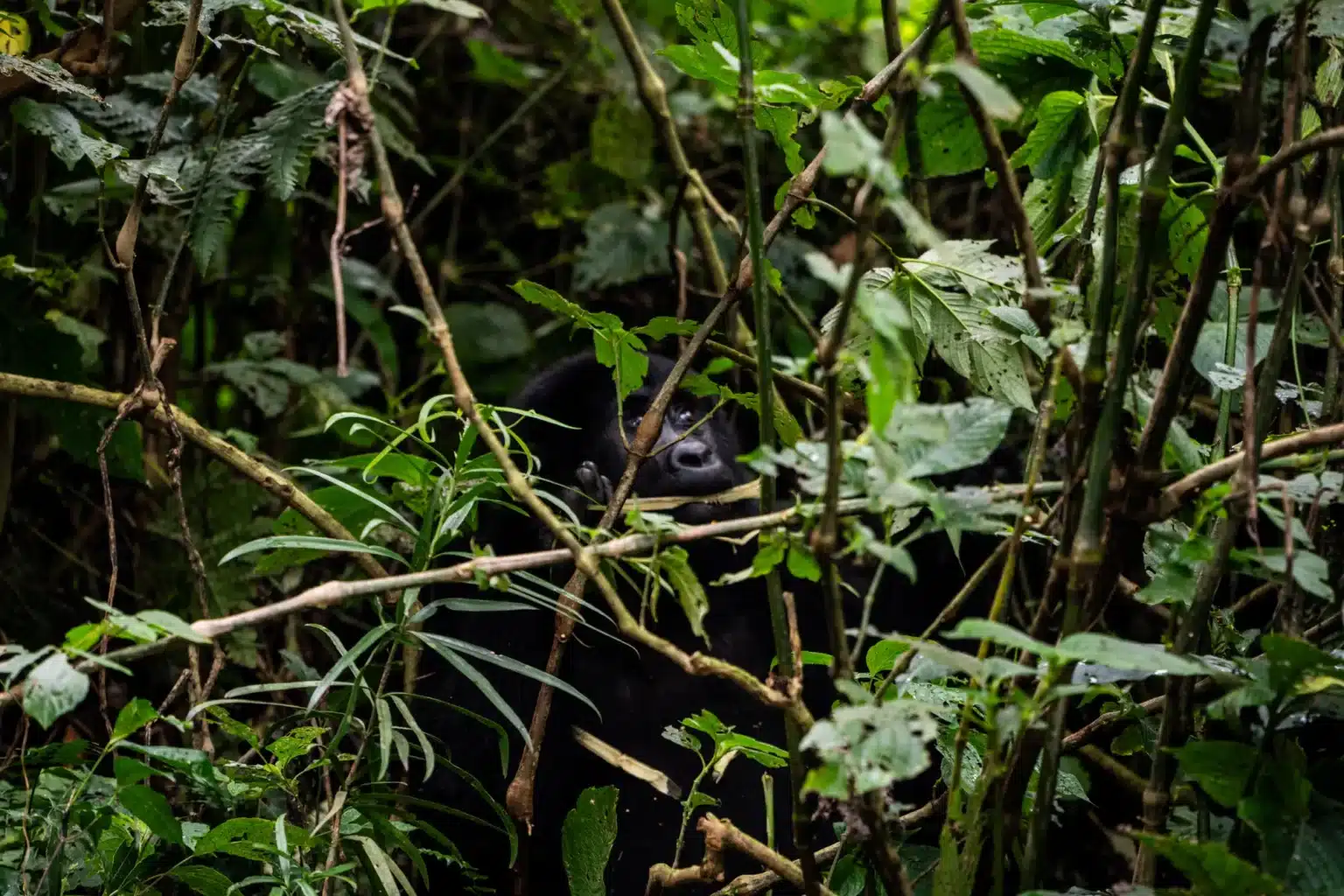
Bwindi Impenetrable National Park is home to almost half of the world’s population of highland mountain gorillas. The steep rise from the rift valley floor to the summit of the Bwindi Mountain range has created a series of extremely diverse ecosystems. This has supported the population of highland mountain gorillas in Uganda. In addition to gorillas, you can find other endemic mountain flora on every hike, adding to the richness and beauty of the experience. The national park is surrounded by villages, all of which benefit from the ecotourism that takes place within the park, creating a strong connection between conservation and community livelihoods.
Mgahinga Gorillas Volcanoes and Golden Monkeys
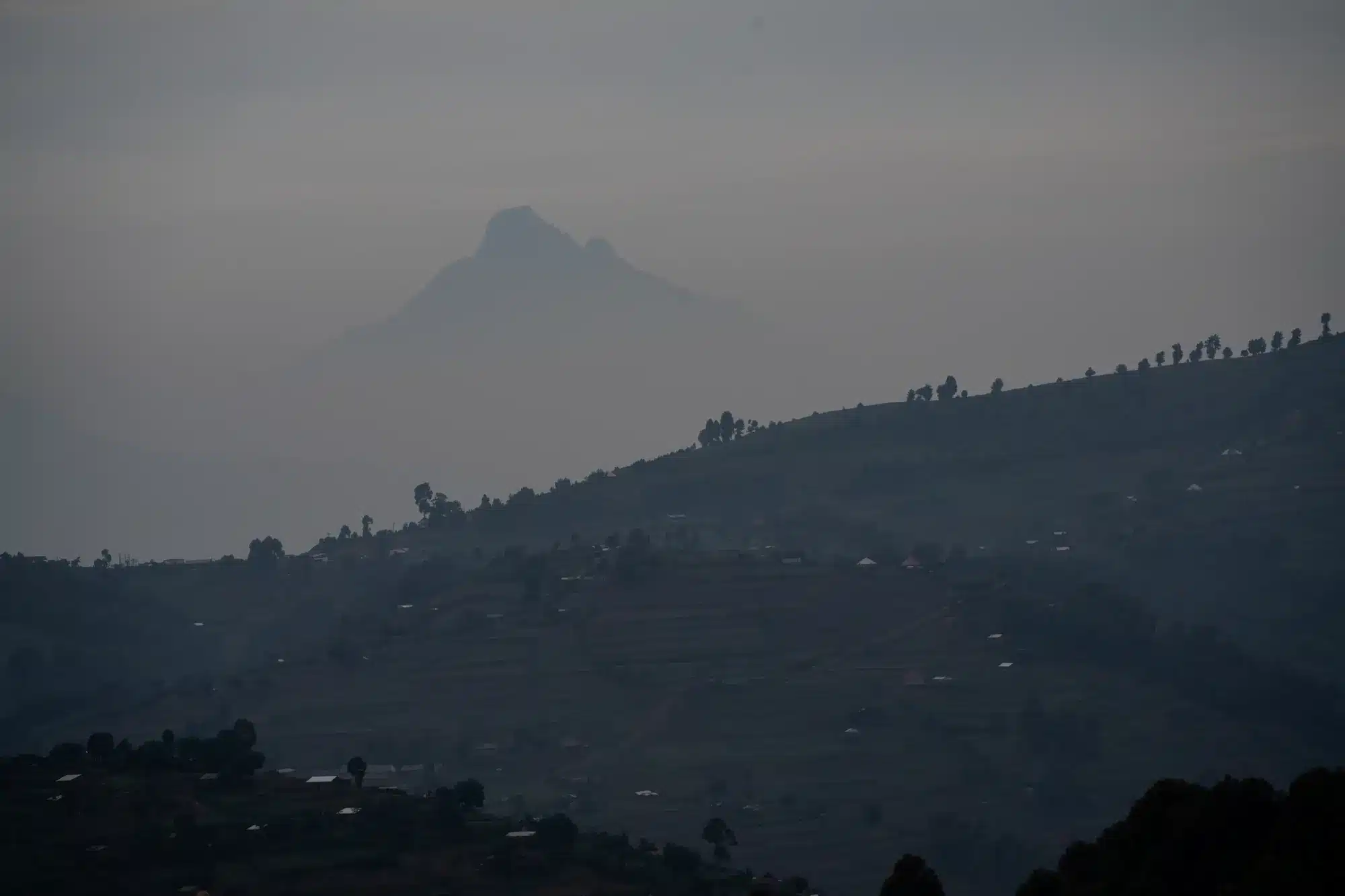
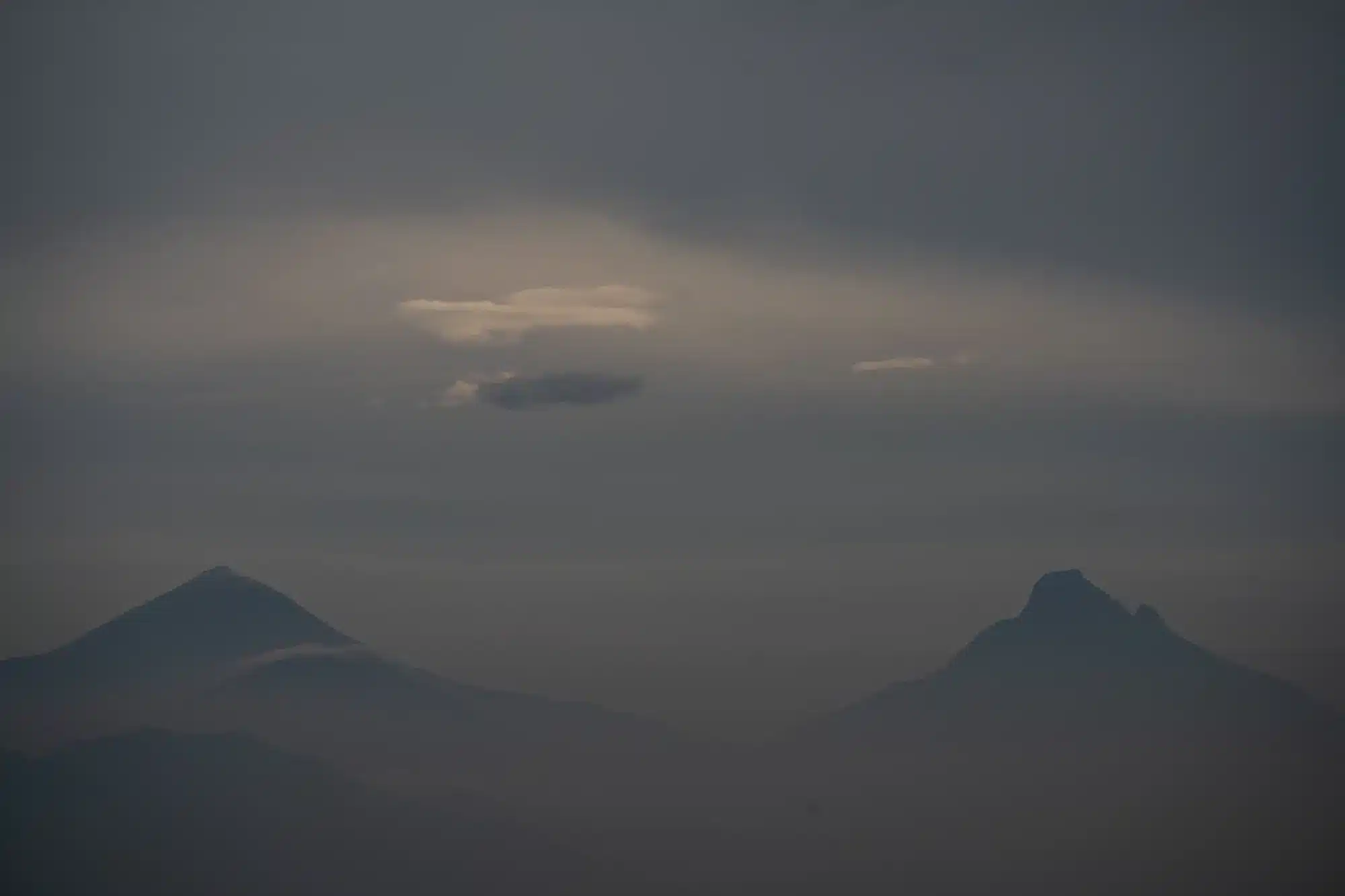
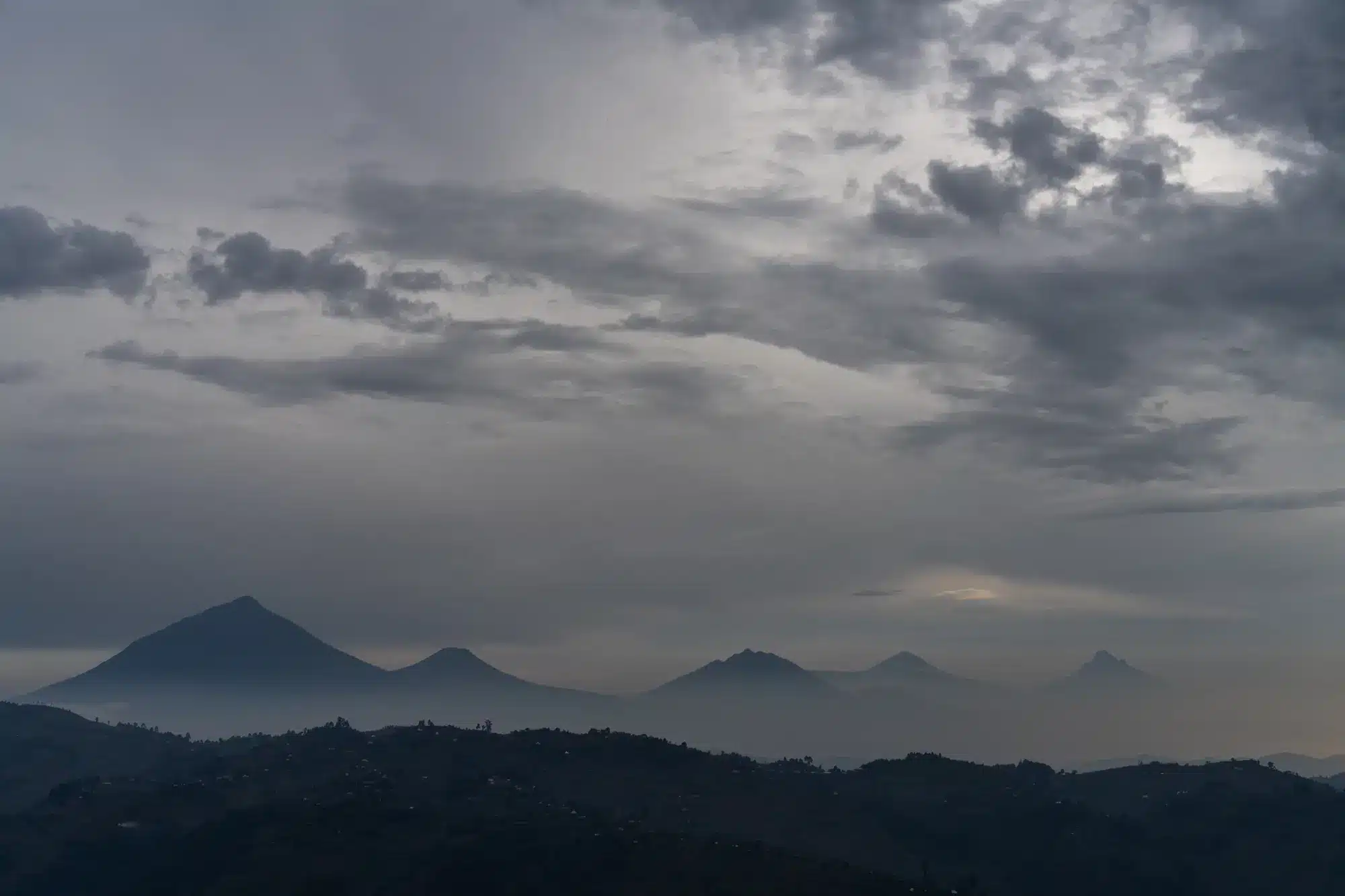
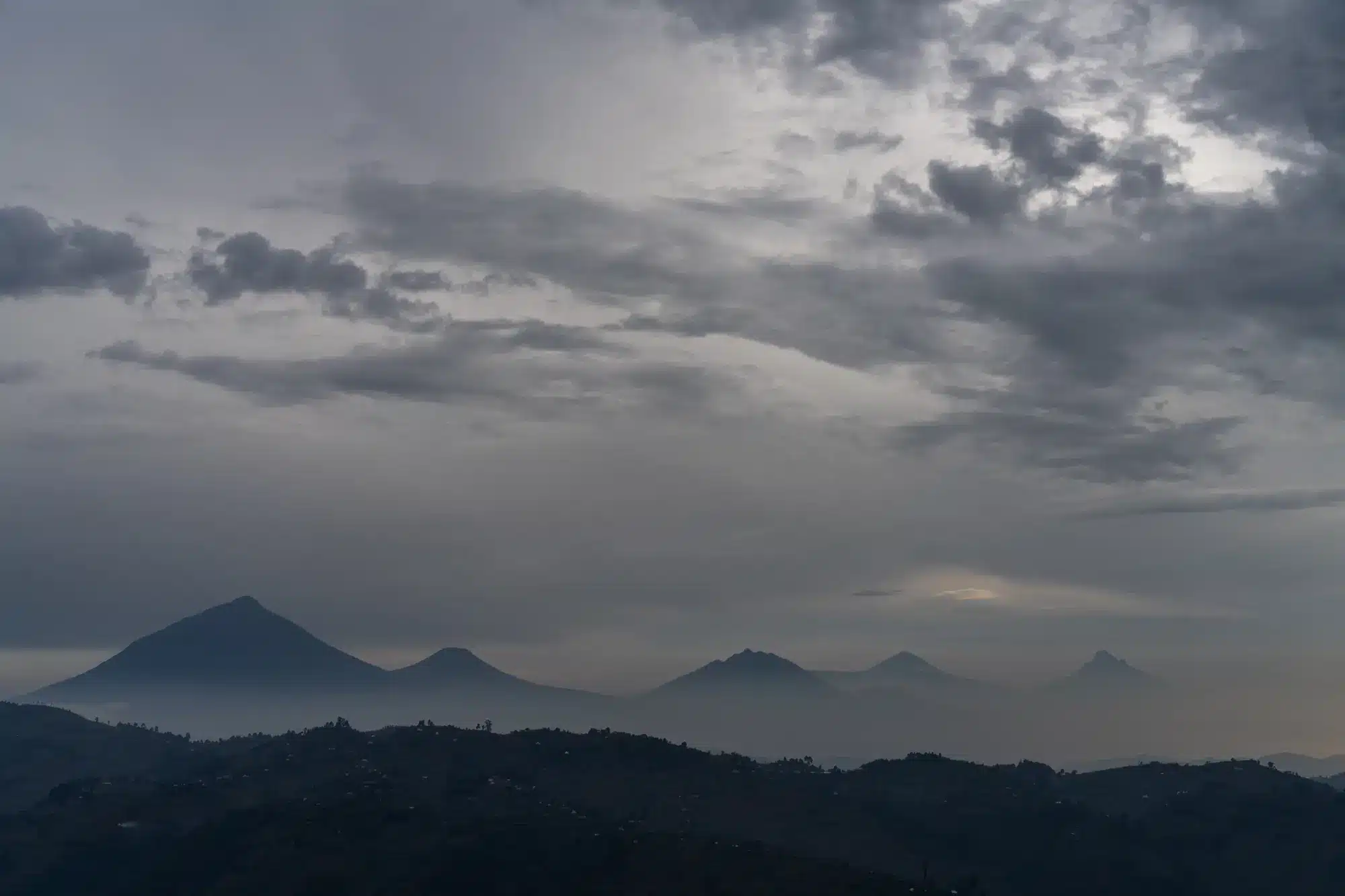
Set between a series of volcanoes on the border of Rwanda and the Congo, Mgahinga Gorilla National Park is more remote than Bwindi Impenetrable National Park. You would not think that, with the word “impenetrable,” but it is the case. The scenery is absolutely stunning, with wide open vistas — a complete contrast to the dense forests of Bwindi. While Mgahinga lacks the number of diverse ecosystems found in Bwindi, it offers an equally impressive visual spectacle. There are fewer gorillas in Mgahinga, but there are also fewer visitors. In addition, the forest is home to the golden monkeys, the second most important endemic primate in Uganda. We always suggest a combination of Mgahinga and Bwindi to allow you to witness the diversity of Ugandas natural treasures.
What to expect on a gorilla Hike in Uganda
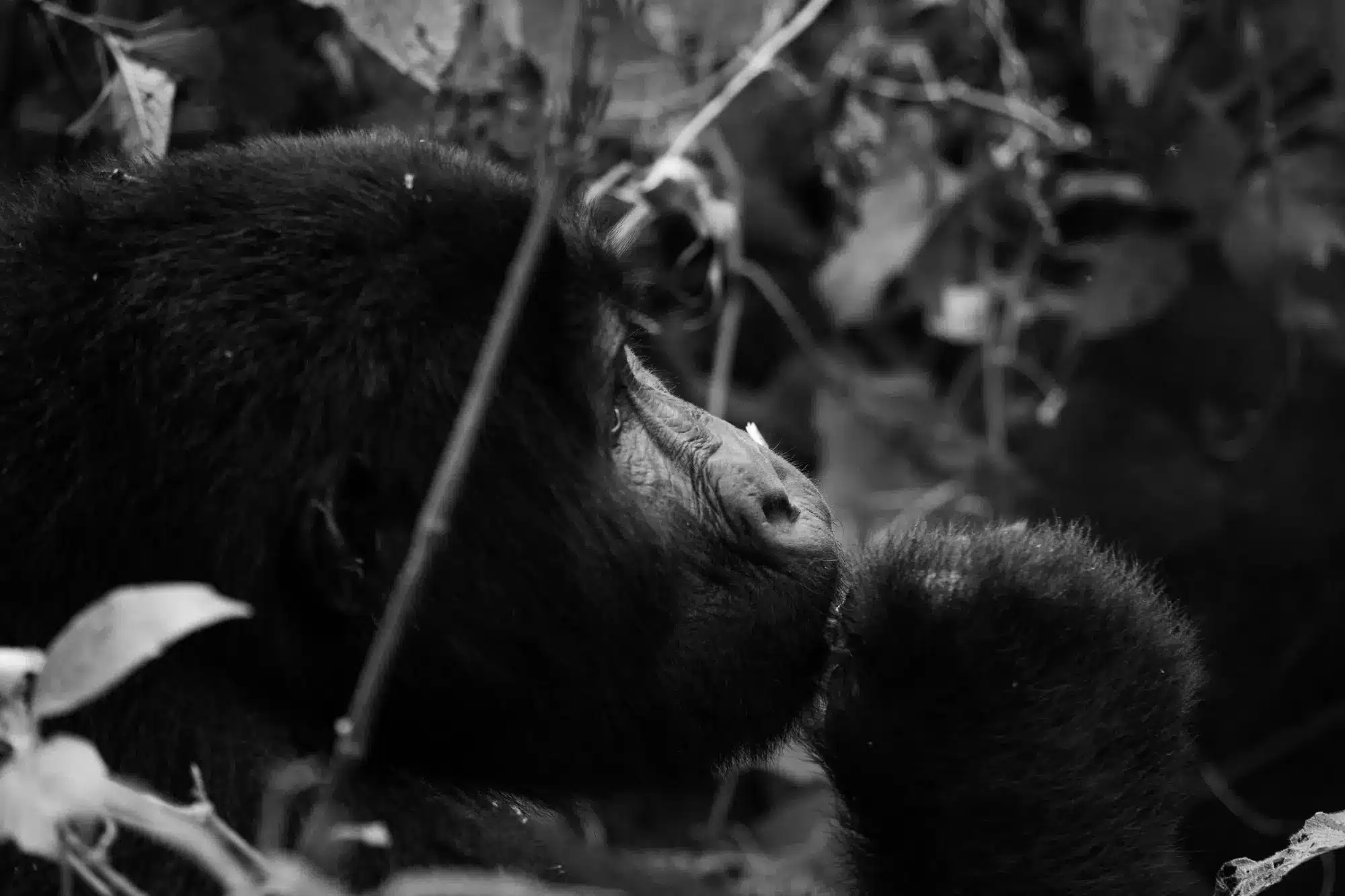
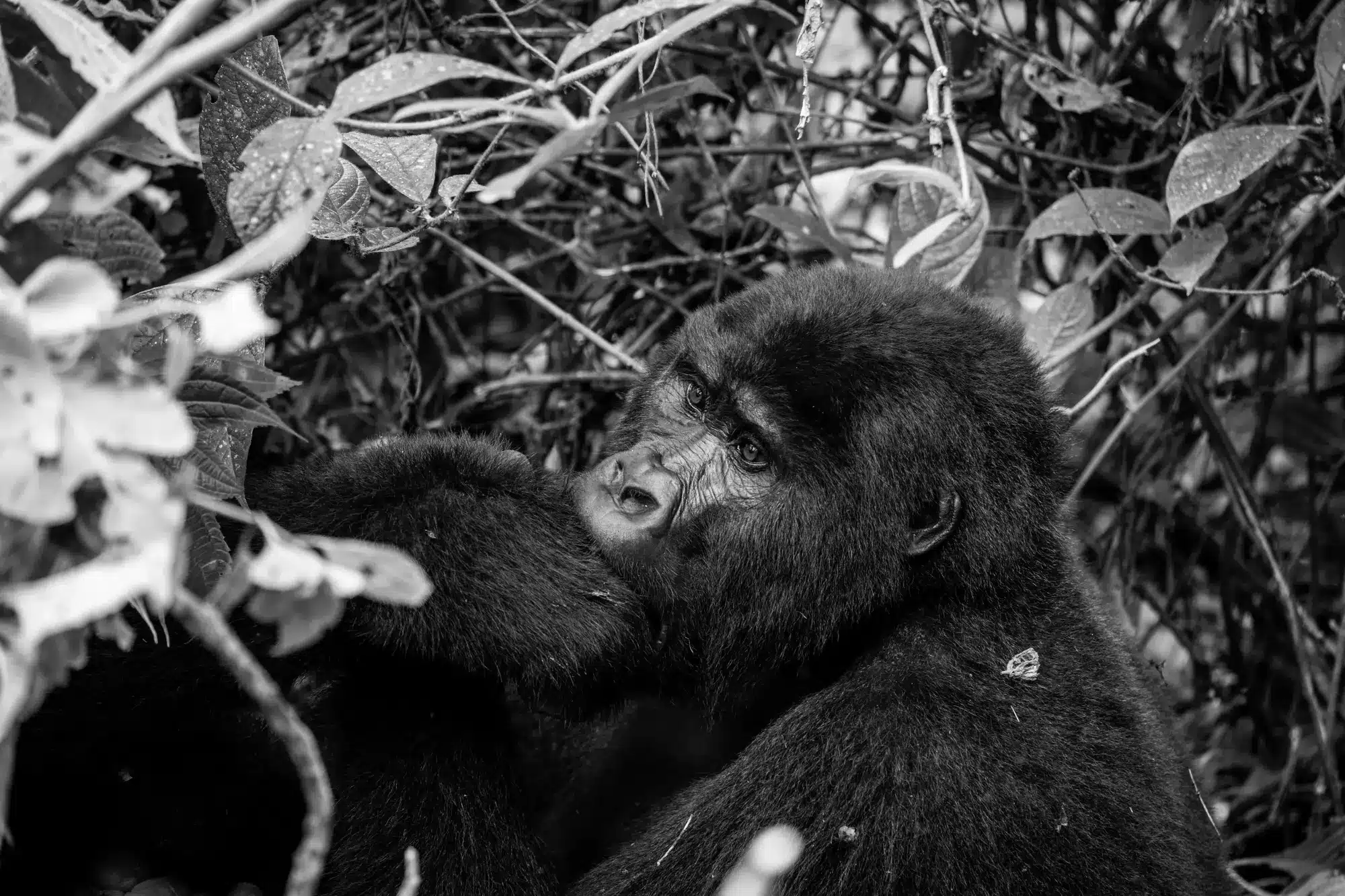
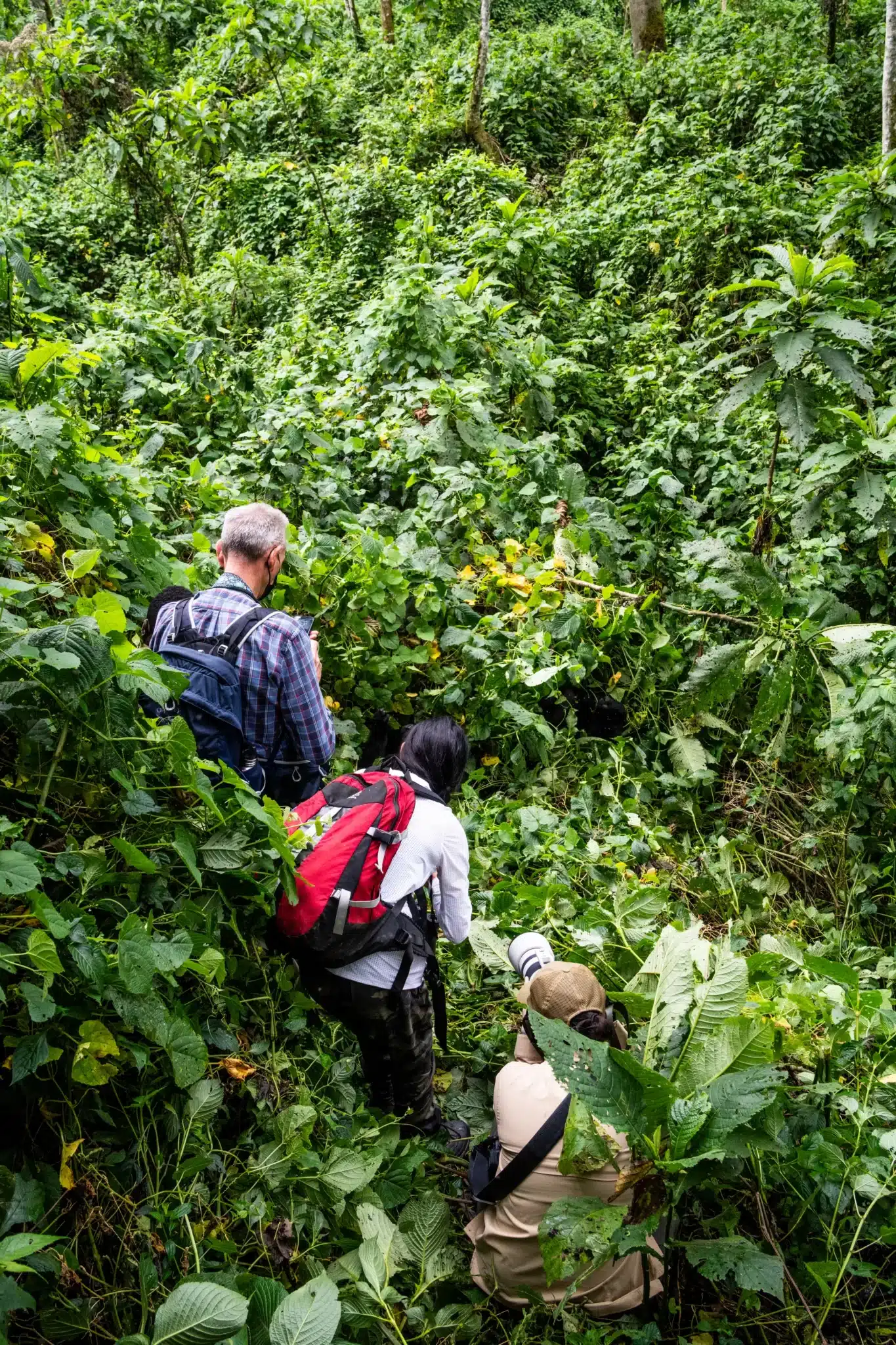
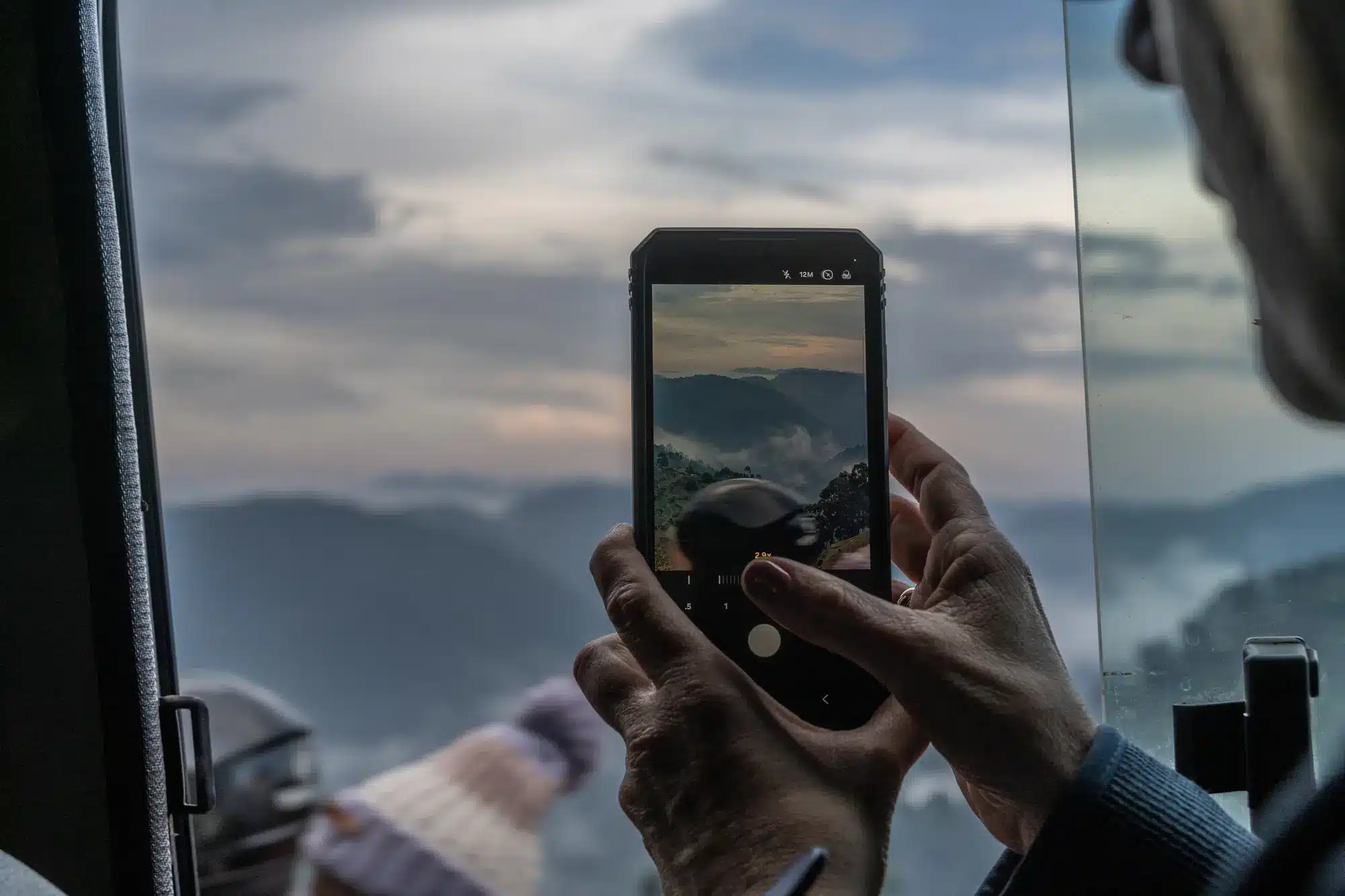
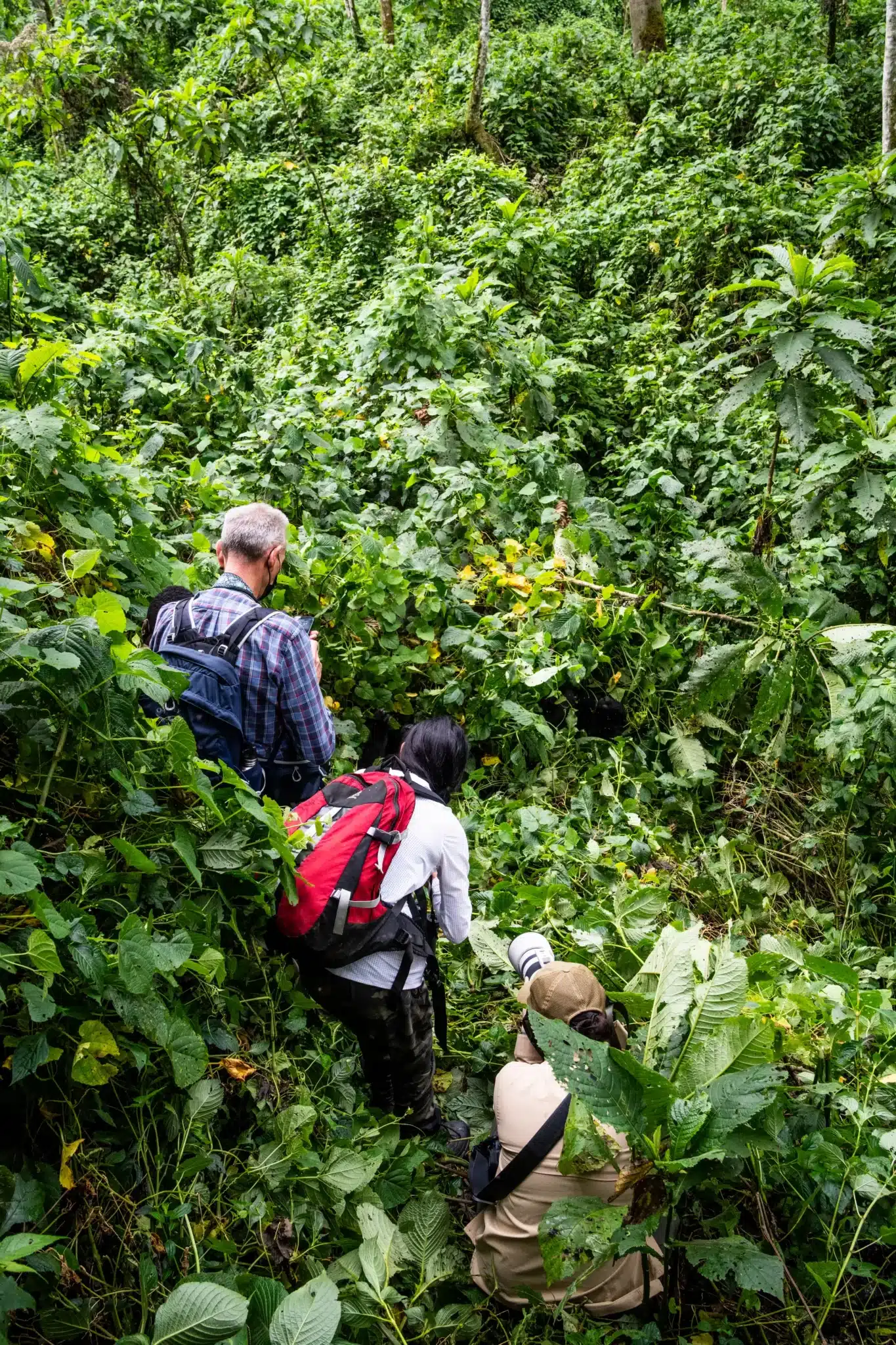
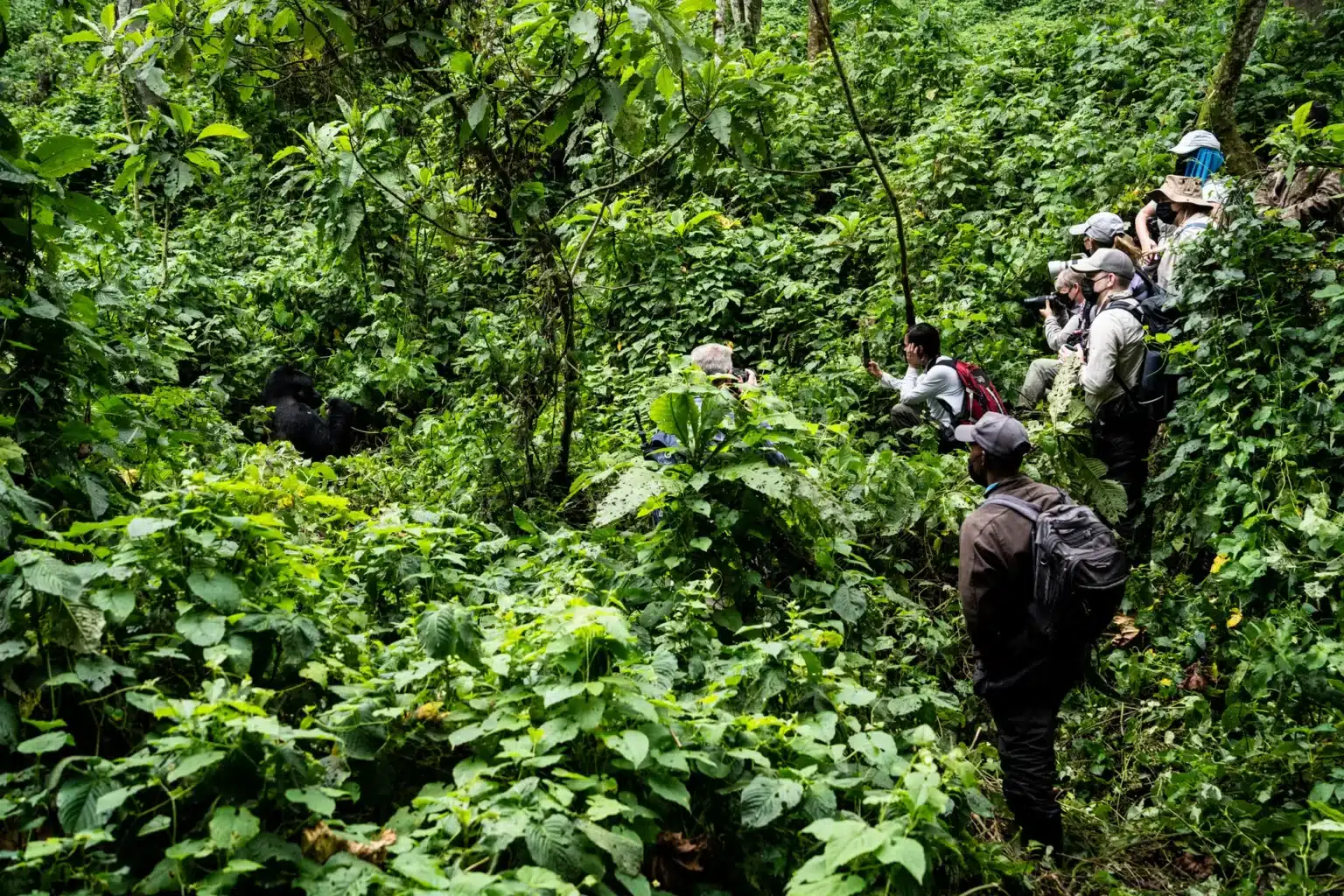
Expect to be at the gate at 8 in the morning for an in-depth briefing from the Uganda Wildlife Service, where they explain the behaviour expected of you. You will then be assigned a ranger and a gorilla family to visit, while Uganda Wildlife Service trackers will have been tracking your family since dawn. The choice of the family you are to visit defines the length of your hike. Every party, regardless of trekking distance, gets one hour with the family of gorillas, and thus far we have never had a washout day with no sightings. The trackers generally get you quite close to the gorilla family, and some people can even take photos with their phones. The guides will tell you exactly where to stand or sit, ensuring the experience is both safe and memorable.
Gorilla Habituation Tracking
Some people wish to have more time with the gorillas than the one hour allowed on a regular trekking permit. For these enthusiasts, we offer a gorilla habituation tracking experience. You will find yourself walking much further to track an unhabituated gorilla family, and when you eventually find the family, you will be allowed up to four hours of interaction with these apes. Permits for this must be booked well in advance and are more limited than the regular trekking permits.
Uganda Gorilla Trekking Permit: What You Need to Know
This is really important: do not book flights or any other segment of your safari holiday until your gorilla trekking permits are secured. Everything on your safari has to be built around the issued permit — that is how few there are. We are experts at Uganda wildlife safaris and generally find that a 12-month lead time is sufficient, especially for groups. If you have a last-minute desire to see the gorillas, please contact us as a matter of urgency and we will try and slot you in. This usually only works for single travellers and pairs.
When is the Best Time for Gorilla Trekking in Uganda?
You can trek with gorillas all year long; however, the drier season is slightly better, as walking is easier. We say “drier” because it is a rainforest, and rain is possible at any time of year. The drier season generally runs from the end of August into September and early October. You might also consider a birdwatching trip to coincide with dry-season trekking.
Why is Bwindi National Park Gorilla Trekking Unique?
Bwindi Impenetrable National hosts the highest number of resident mountain gorillas in one Park in the world. There are an estimated 456 gorillas living within Bwindi, out of the worlds total remaining population. So the chance to see them is almost guaranteed. The remaining gorillas live in families divided over Parks in Rwanda, Burundi and in the Mgahinga Forest Reserve.
On the morning of your trek to see the Bwindi Mountain Gorillas, you will be matched to a fitting family of gorillas to visit. This can be as close by or as far away from the gates of the Park as befitting your fitness, your wish to hike shorter or longer, and to see specific families with either adults, males or youngsters.
If you wish for some help to carry your photographic equipment and water up the tracks of the forest, then you have the option to hire a porter. You can do so on the morning of your trek. A rotating group of porters is available every day for all visitors. Their fee is paid directly to them, and is awelcome economic boost to the local villages surrounding the Forest Reserves.
The Cost of Gorilla Trekking In Uganda
Uganda Gorilla Trekking permits cost, at the time of writing, $850 per person for standard permit. This gives you a tracker and his escorting ranger, their knowledge of the forest and tracks, the support of the actual tracking team once close to the gorilla family, and your time with the Gorillas. Note that a standard permit gives you 1hour with the gorillas once you are at their site; no longer. A special ‘habituation’ trekking permit cost, at the time of writing, $1250 per person.
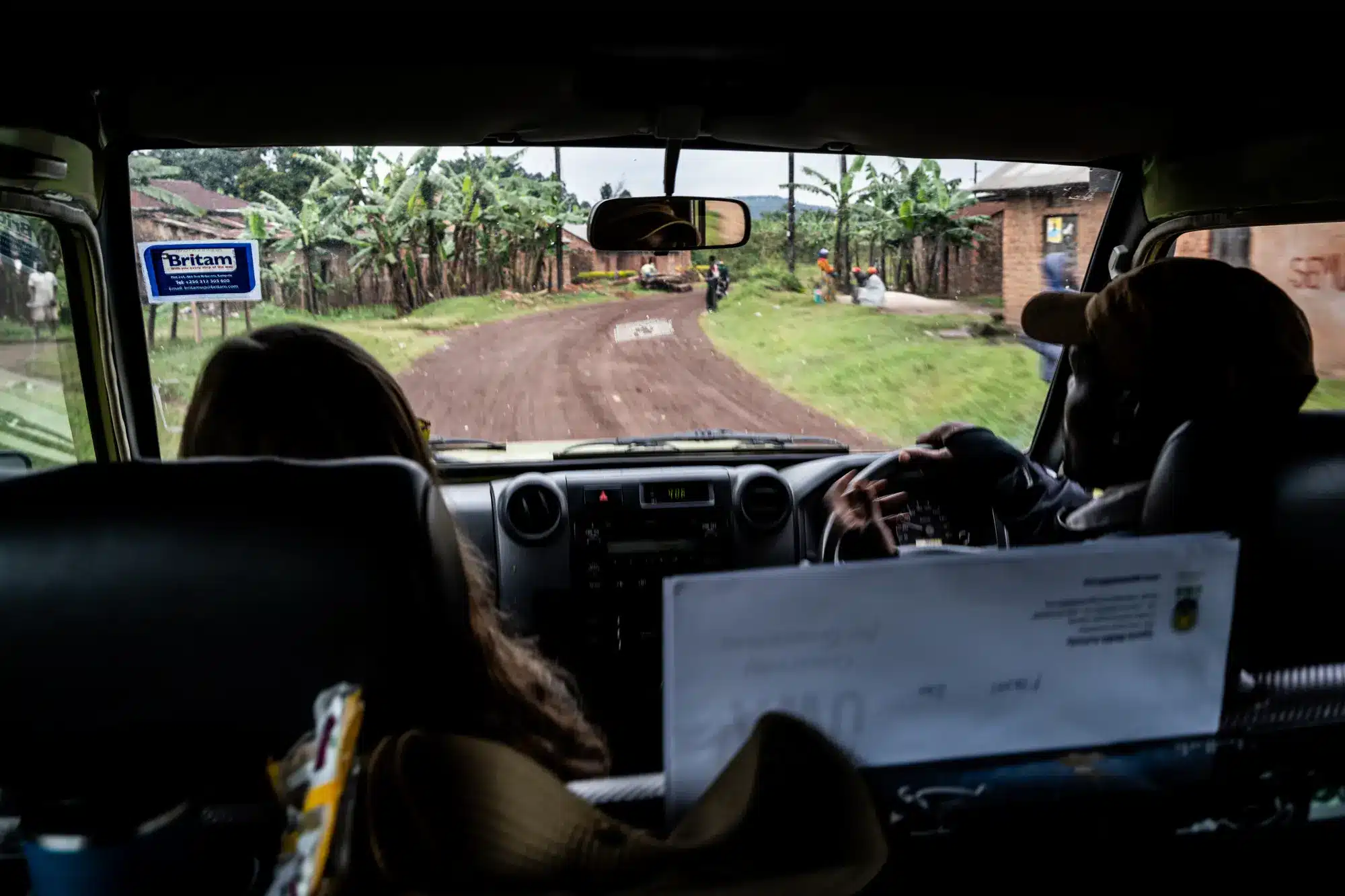
Your Uganda Gorilla Tour price will cover your transport & drivers to and from the Reserve of choice; your permit fee itself; accommodation prior and post the trekking day; government levies on the accommodation; and any other locations you wish to visit during your tour.
To be assured of a Gorilla trekking permit in the season you wish to travel, it is essential that you request a permit well in advance. For groups this should be a minimum of 12months so that you have the chance to book all in a group on the same date, into the same sector of the Forest and be able to have a range of options for your accommodations. For couples and families of up to 4, we can still work on itineraries within 3 to 4 months but it should be noted that ALL tours must first have a permit date confirmed before any other services are booked.
Please note that it is customary and appreciated to give a gratuity to most people involved in your Gorilla trekking day: a few dollars to your head tracker, his ranger and his forest team.
Best Time Of Year To Visit Uganda for Mountain Gorilla Trekking
As Bwindi is a tropical rainforest and you are near the equator: keep in mind that there is always a chance of (some) rainfall. Even in a dry season. it never goes completely dry, as the name already suggests. And it is precisely this moist forest environement that allows the Gorillas to survive. A more dry season (note we do not say ‘dry’) runs from June to August into September, and again December to February. Drier months are ideal for trekking. Wetter times occur between March to May, with a short wet period in late October and November.
With drier conditions, it is easier to hike. This is the same for any forest in which you aim to go up a hill! With drier tracks, it is less slippery, easier to walk, less easy to slip or slide, and more enjoyable to sit and watch the great apes if it does not pour down your neck. Your cameras will also be happier. And while dense green forest is a gorgeous colour: the thicker the foliage, the harder it is to spot any animal- even as large as a 800pound Gorilla.
With the understanding that seasons are seasonal and never start or end on a set date- we find that the best time of year to visit Uganda is between late July – September, or in December to February to also spot migratory bird species. This is the same for both the Forest Reserves of Uganda and the Savannah Parks of Uganda. Should you have a specific avifauna interest: contact us for a more finetuned seasonal advice.
Gorilla Trekking Day & What to Expect During a Uganda Gorilla Safari
You always arrive at the your Gorilla region accommodation the night before your planned Gorilla trek. Your driver-guides will take you to the entrance and headquarters of the Forest sector you have a permit for. Here, you will receive a communal briefing about the hike, the terrain, what to bring, and to discuss how long you wish to walk for; ie do you wish to aim for a family living nearby or more remotely. You then start the hike in groups of 8, each group has its own head-tracker and escorting ranger.
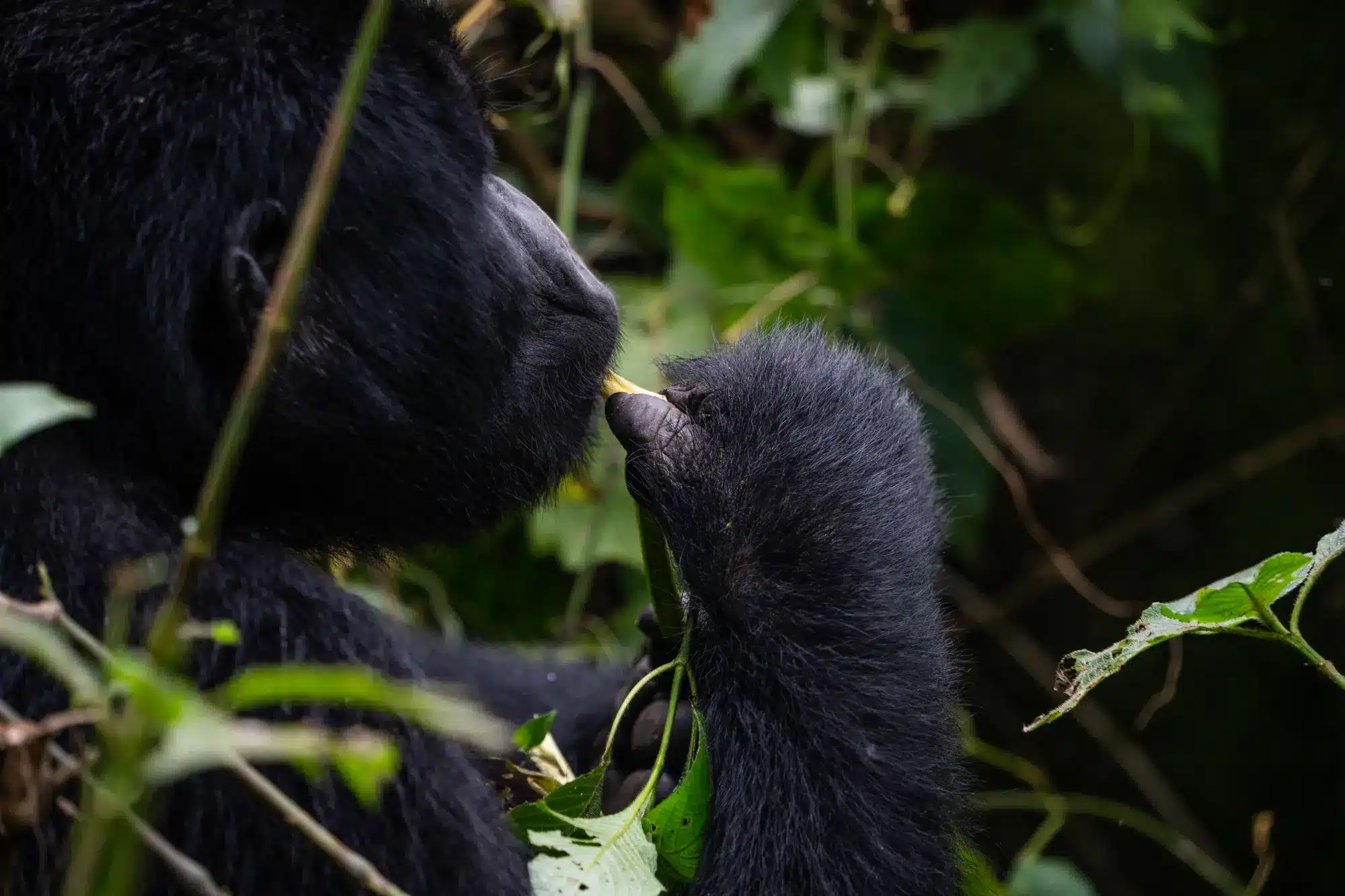
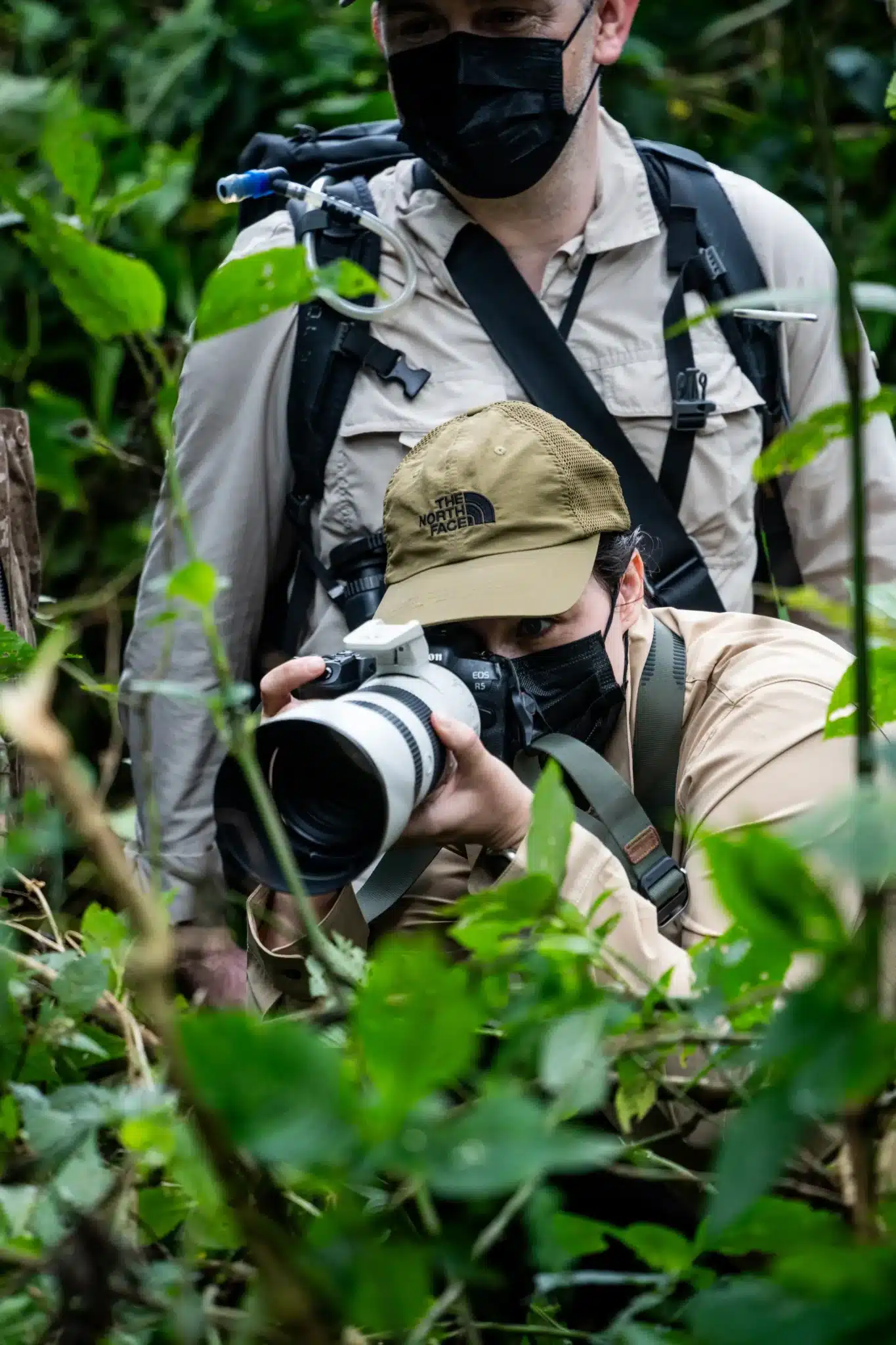
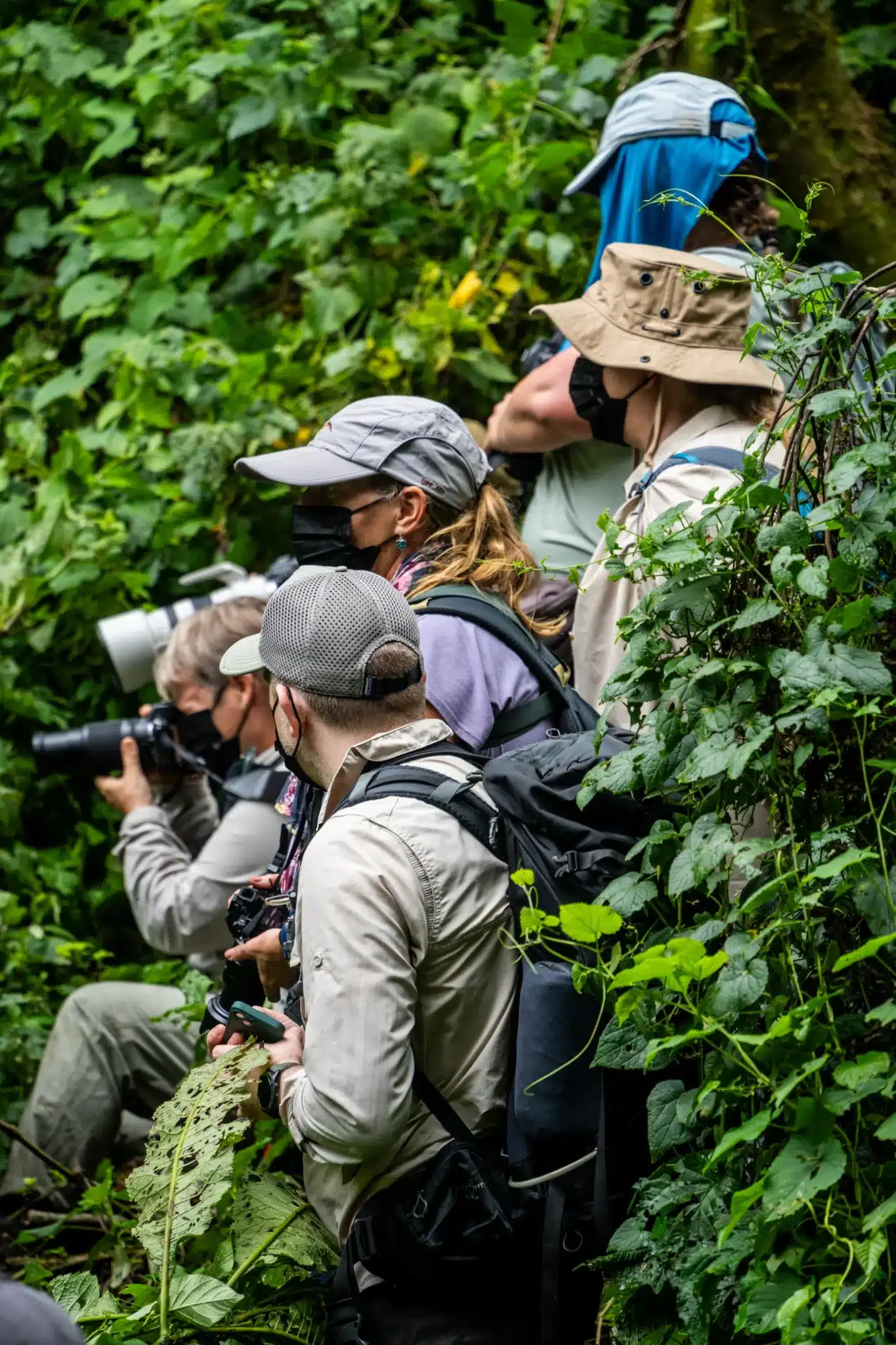
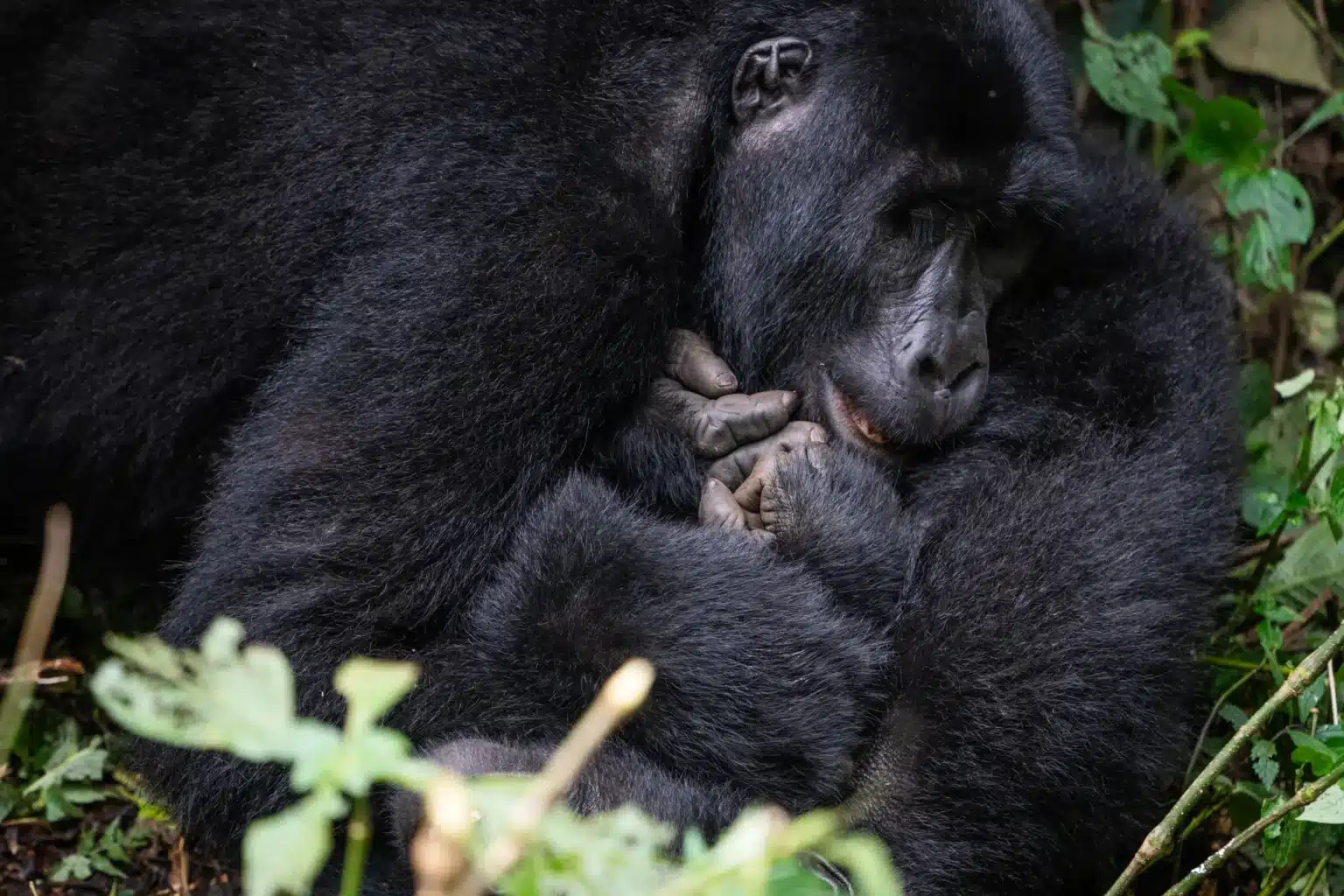
Once close to the Gorilla family you are due to visit, you will gather and be instructed what to do when with them. You are asked to leave everything behind, and from then on only carry your camera, lens, possibly a phone. You will be required to wear a face mask to protect the gorillas. You then cover the last 100metres to the gorilla family. You do NOT use flash, shout, point, ‘grunt’, or touch the gorillas; not even when the youngsters try to engage. You simply observe, but are welcome to take photos and video as much as you wish and can. The guides are next to you, behind you, around you to make surer you are safe, and that you stand/sit/move/evade the gorillas when necessary.
Most visitors use hiking sticks when going up the hilly tracks. This is not because it is technically difficult to walk but just to make it more comfortable – especially when coming down again. Wear a good backpack that allows you to carry a camera, lens(es), binoculars if you wish, water and a rainjacket or some other smaller items. Do not carry anything you do not need. Make sure you have a cover for your bag, or that this is waterproof. Anything too large, too heavy or too cumbersome to get a lens in and out of can be very frustrating once close to the gorillas. Make sure you have tested your boots well before you hike during your Uganda Gorilla trek! New boots are the worst idea. Bring extra socks for a second day or a hike in the next forest site: you will get wet, muddy and smelly socks. A hat is ALWAYS a good idea in hot or wet climates and if you are prone to insects, bugs, itches: bring some talcum powder on tour with you.
Uganda Gorilla Sanctuary and Conservation Impact Of Gorilla Safari in Uganda
A ‘sanctuary’ provides safety, shelter, protection to those in need or in danger. And the Uganda Mountain Gorillas that have survived untill today, certainly need all the help they can get from humans. In essence, your visit to the nation of Uganda and your choice to pay for a permit to see them helps to provide them with this much-needed sanctuary. The steep price of a permit, and any other conservation fee you pay during your tour, pays for the training of rangers, their salaries, the education of the Ugandan people to remain committed to the protection of these maginificent creatures, the costs of conserving their habitat, to prevent habitat loss and poaching, and to keep the Uganda Mountain Gorillas from the harm of poachers and other dangers.
Without the support and dedication of not only those that work directly with the gorillas and dedicate their entier lives to them, but also the commitment of surrounding human habitats, the Gorillas will not survive. They need a very specific ecosystem to live, eat and thrive and if this is destroyed: we will loose these animals forever. Gorilla trekking permits provide the necessary funds to do all of this and it is a Herculean task to keep it on track. The Ugandan citizens are rightfully proud of their Governments’ efforts to keep their gorilla population safe and thriving. The increase in numbers of Uganda mountai Gorillas is a good example of the success of these efforts.
Luxury Safaris in Uganda Offering Gorilla Trekking
While on a Uganda Gorilla safari, you have a range of accommodation options. These can range from simple and friendly small local hotels, to mid range hotels with great facilities, to superb lodges offering every luxury you may wish for during your Gorilla safari. The most important factor to keep in mind when deciding where to stay is the location: is it conveniently close to a site of interest? Is there a special sighting to be had in this location? Is it the perfect starting point to hike to the Gorillas or Golden Monkeys or to go on a game drive ? After these considerations, budget will come into play and you may wish to opt for a luxury lodge during your Uganda holiday or imply for the best located Gorilla trekking lodge.
All lodges that are suggested in our Uganda itineraries, will have perfectly acceptable services such as cleanliness, safety, food and staff quality, great views of your natural surrounding, general comfort during your stay with meals and drinks available. Some are located near a site of special interest and will offer extra services such as private guides, bird specialists, primate guides, or practical extras such as proximity to an airport, great starting point for boat tours or game drives, or a simple extra service like boot cleaning and laundry when on a Gorilla tour.